Hidden Costs of Opening an Indoor Playground — Permits, Insurance and Operational Expenses Owners Forget
Hidden Costs of Opening an Indoor Playground — Permits, Insurance and Operational Expenses Owners Forget
Indoor playgrounds are rising in popularity, with many parents preferring to take their kids to a secure, weatherproof place where they can run, climb and meet new friends. Whether you’re expanding your entertainment center or establishing a new facility, opening an indoor playground is an excellent business opportunity. However, like all ventures, indoor playgrounds entail an array of costs that new owners often overlook.
It’s critical to identify these expenses ahead of time, as surprise fees can delay openings, drain working capital and reduce profits after you launch.
This guide explores the lesser-known startup costs that come with opening an indoor playground. Read on to learn more about managing these in the early phases of planning your play area.
What Causes Indoor Playground Budgets to Fall Through?
Before opening an indoor playground, create a comprehensive budget. Some owners misjudge startup costs by only accounting for what’s visible, such as facility and equipment costs. While you might expect big-ticket items to be the culprit, don’t ignore the smaller expenses that may arise during the pre-construction stages.
Site-specific costs vary by region and facility, with local codes and unforeseen maintenance influencing your launch timeline. Utilities, insurance premiums and hourly labor rates vary by local economic climate.
Consider factors like demographics, market trends and nearby competition as you create a budget for your play area. Local market research makes all the difference between opening on time and losing control of expenses before your launch date.
Hidden Startup Costs for Indoor Playgrounds
When you budget for hidden fees, you set up your business for financial success. Let’s review the expenses associated with opening an indoor playground.
Installation and Shipping
Indoor playground equipment requires delivery, installation and labor, with factors like regional variation, shipping distance and customization affecting the cost. State-by-state freight expenses may also vary.
Consider the size, weight and complexity of your playground equipment. How many pieces are there? How long will it take to put everything together according to safety standards? Implementing obstacle courses, multiple levels, complex structures and custom requirements can affect installation costs.
Compliance and Permits
Compliance is nonnegotiable for indoor playgrounds because it keeps equipment secure and prevents legal concerns. Before opening your facility, you’ll need to comply with equipment safety regulations, such as ASTM F1487, which ensures safety performance for equipment built for kids ages 2 to 12.
Indoor playgrounds also call for zoning permits, building licenses and health approval. Look up your local building codes and zoning variations, as permits and certifications may differ by region.
Insurance Premiums
Your facility will be responsible for paying various legal fees and insurance premiums, including these indoor playground insurance requirements.
- Liability insurance: Covers accidents that occur on the premises
- Commercial property insurance: Protects facility and equipment in case of damage
- Workers’ compensation: Secures employee safety while on the clock
Higher-risk features like climbing walls, zip lines, foam pits and trampolines may increase your indoor playground insurance costs.
Marketing and Customer Retention
Whether you’re reaching parents on Facebook or applying SEO techniques to rank more highly on Google, you can use various strategies to attract families to your facility. Even before you officially open your doors, pre-launch marketing campaigns can impact your early success and set you up for financial independence. Don’t forget to factor in the costs of continued outreach efforts such as paid ads, social media posts and events surrounding your grand opening.
Operational Expenses
Indoor playground operating costs include hiring and training employees. Remember that your facility may also require upgrades over time.
- Staff: You’ll need a team to oversee daily operations, including playground attendants to supervise the kids, janitors to maintain the building, staff to repair play equipment, receptionists to manage bookings and event coordinators to handle birthday parties and other events.
- Climate control: Paying for monthly utilities like lighting, play area power, sanitation systems, water, restrooms and HVAC, varying by facility size and peak seasons.
- Waste management: Handling a daily sanitization schedule, deep cleaning, trash, recycling, restrooms, repairs and pest control.
Maintenance and Safety Inspections
Indoor playgrounds require regular maintenance, including:
- Reactive repairs
- Daily sanitization
- Weekly or monthly deep cleaning
- Competitive upgrades
- Routine safety inspections
Proactively allocate funds to reduce downtime. To maintain the safety of your playground equipment, check daily for hazards like these.
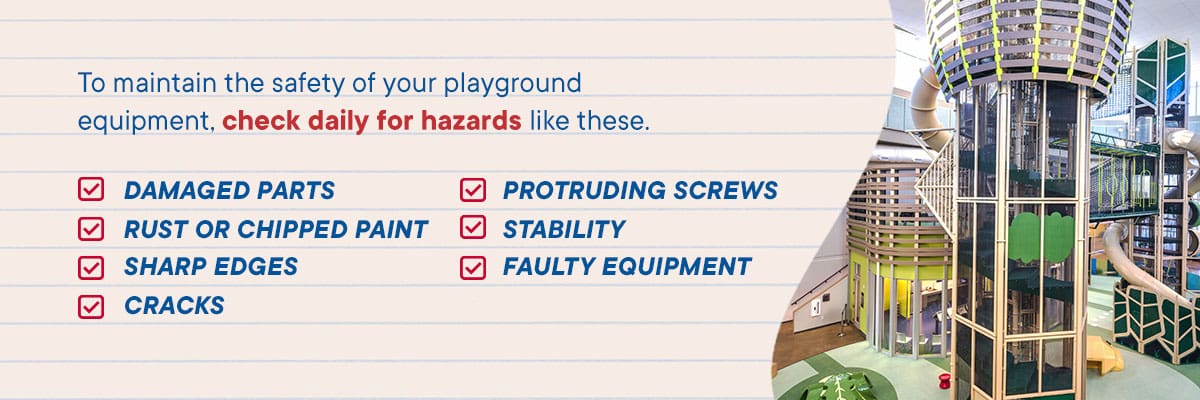
- Damaged parts: Assess equipment for loose, missing or broken parts.
- Rust or chipped paint: Look for peeling paint or rusted surfaces.
- Sharp edges: Inspect for splinters or rough areas.
- Cracks: Search for visible cracking in equipment surfaces.
- Protruding screws: Repair or refasten projecting hardware so that it doesn’t tear clothes or skin.
- Stability: Non-anchored equipment and handholds should be stable and secure.
- Faulty equipment: Look for wear and deterioration and verify that equipment is safe to play on.
Budgeting Strategies to Consider
Realistic planning is critical for accurate budgeting. Consider the following strategies as you develop a spending plan for your indoor playground.
- Track costs: Create a detailed budget and review often to adapt to changing expenses. Consider initial setup and operational spending to optimize revenue.
- Adopt technology: Transform your operations with automation. You can use various tools to streamline customer interactions, marketing, inventory and booking.
- Outsource tasks: Delegating tasks helps businesses focus on core growth rather than day-to-day maintenance. Hire in-house professionals for maintenance, marketing and finances to minimize overhead costs.
- Optimize campaigns: Use marketing strategies such as SEO, email campaigns and social media to create local buzz. Follow the metrics to ensure these efforts are paying off, and adjust as needed.
- Use a turnkey solution: Simplify the opening process by working with a turnkey partner for end-to-end service. Stay within your budget by streamlining design, manufacturing and installation.
Design Your Indoor Playground With Soft Play®
Anticipate preconstruction expenses by accounting for the hidden costs of an indoor playground. Partner with a turnkey company who understands your unique needs to create an attractive indoor playground design that benefits your business.
With decades of experience, Soft Play is a trusted source for fun, accessible playground solutions. Our experts are here to help you reach your budget and entertainment goals as you open an indoor playground.
Find a tailored play solution that works for kids, parents and your business. We offer a range of products, including toddler play areas, contained playgrounds, soft play playgrounds, inclusive play and design and manufacturing services. At Soft Play, our mission is to guide business owners to develop their vision with successful design, installation and maintenance.
Ready to bring your indoor play area to life? To request a quote, connect with a representative today!