Indoor Playground Startup Costs Breakdown
Indoor Playground Startup Costs Breakdown
Starting an indoor playground can be an exciting business opportunity, but costs vary based on location, size and the experience you want to create. What doesn’t vary is the need for a comprehensive budget that accounts for every essential expense.
With a clear understanding of indoor playground startup costs, you can build a realistic investment plan and account for every critical line item before your opening. This guide provides a complete checklist of costs for your indoor playground business plan, helping you launch with financial confidence.
A Comprehensive Checklist for Your Business Plan
Experts project the global family and indoor entertainment center market will grow significantly, reaching an estimated $102.8 billion by 2032. With families actively seeking safe, engaging year-round indoor activities for kids, investors who plan carefully can tap in to this expanding opportunity. Here’s a step-by-step explanation guide to the major cost categories you’ll encounter when opening an indoor playground.
1. Facility and Build-Out Costs
Foundational costs of securing and preparing your space, such as your lease, renovations and utilities, come first, and represent some of the largest investments you’ll make.
Commercial Lease and Deposits
Your lease will likely be one of your largest recurring expenses. Most commercial landlords require first and last month’s rent plus a security deposit up front. Lease terms are negotiable, so consider working with a commercial real estate agent who understands how to secure favorable terms. Several factors influence your monthly rate.
- Location desirability: Prime spots near residential areas or shopping centers command premium rates.
- Total square footage: Larger spaces increase your base rent substantially.
- Foot traffic patterns: High-visibility locations with heavy pedestrian traffic cost more.
- Local market conditions: Regional economic factors affect commercial real estate pricing.
Architectural and Design Fees
Professional architectural and design services are essential for maximizing your space, improving guest flow and meeting local building codes. Experienced designers configure play zones, party rooms and café areas to optimize customer experience and operational efficiency. Working with established playground partners streamlines this phase — many offer an expert design process that reduces the need for separate architectural consultations.
Renovations and Construction
Transforming a raw commercial space into a welcoming play environment requires investment. Plan for the potential demolition of existing walls or fixtures to create space for party rooms or café areas, restroom installation and aesthetic improvements like painting and flooring in non-play zones.
Utilities and Essential Systems
Plan for installation and deposits for essential building systems. A powerful HVAC system is critical for active play areas. You’ll also need plumbing for restrooms and kitchen or café operations. Electrical work supports lighting, equipment and point-of-sale systems throughout your facility.
2. Equipment and Amenity Costs
Equipment and amenities form the core customer experience. Play attractions and features such as themed structures and furnishings will keep families coming back for more.
Playground Equipment and Theming
Themes and equipment are your indoor playground’s primary attractions. The cost to build them will range widely based on size, complexity and customization.
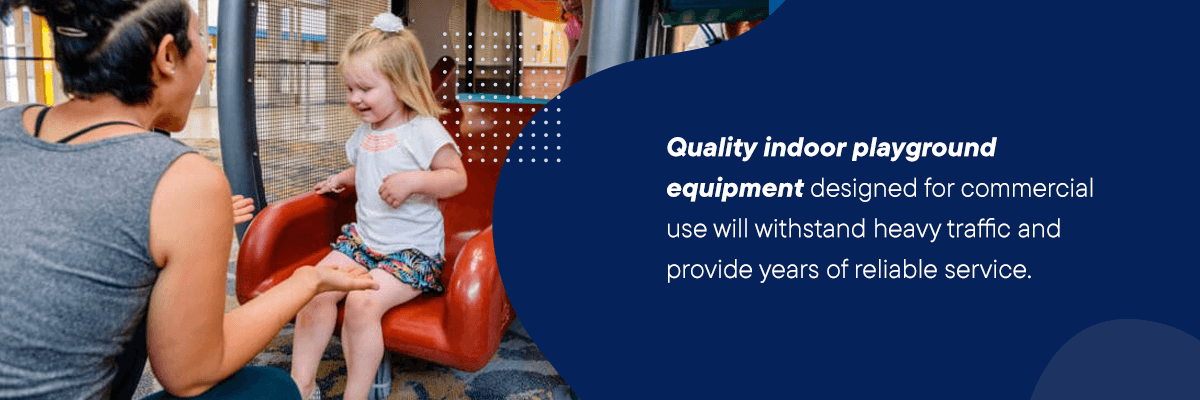
Simple structures work well for smaller facilities, while elaborate custom theming transforms family entertainment centers into destination experiences. Quality indoor playground equipment designed for commercial use will withstand heavy traffic and provide years of reliable service. Consider your target age groups and space constraints when planning your equipment investment.
Safety Surfacing and Flooring
Safety surfacing is a nonnegotiable investment for risk management and regulatory compliance. Your flooring must adhere to standards set by the Consumer Product Safety Commission and the American Society for Testing and Materials to protect kids from falls. Working with a provider focused on meeting and exceeding quality and safety standards ensures your surfacing protects guests while meeting insurance requirements.
Point-of-Sale Systems and Operational Software
Invest in software to efficiently manage ticket sales, party bookings, concessions and customer data. Modern POS systems designed for entertainment venues can track inventory, manage staff schedules, process waivers and provide analytics on your busiest hours and most popular offerings.
Furniture and Fixtures
Plan for furnishings that complete your guest experience.
- Lobby furnishings: Comfortable seating for parents and waiting areas
- Party room essentials: Tables, chairs and decorations for birthday celebrations
- Café equipment: Food prep, serving and beverage equipment if offering concessions
- Restroom fixtures: Commercial-grade installations built for high traffic
- Storage solutions: Shelving and cabinets for supplies and inventory
- Brand décor: Signage, artwork and finishing touches that reinforce your identity
3. Legal and Administrative Costs
Behind-the-scenes costs are crucial for protecting your business and ensuring you can legally operate.
Business Licensing, Permits and Fees
Research the specific local, state and federal licenses required in your area. Most indoor playgrounds need a general business license, a certificate of occupancy confirming your space meets building codes and health permits if you’re operating a café. Some jurisdictions require additional entertainment or amusement facility permits. Your local county clerk’s office can help you identify all necessary licenses before opening.
Liability and Business Insurance
Comprehensive insurance protects your business when serving families. Costs depend on your location, facility size and coverage limits. An insurance broker experienced in entertainment facilities can give you more information about these coverage types.
- General liability: Covers customer injuries and accidents on your premises
- Property insurance: Protects your equipment and facility from damage or loss
- Equipment breakdown: Covers repair or replacement of critical systems
- Workers’ compensation: Required coverage for employee injuries on the job
Professional and Legal Consultation
Professional guidance requires investment during your startup phase. An attorney can review your commercial lease, draft liability waivers and ensure your business structure protects your personal assets. An accountant will set up your financial systems, advise on tax strategies and help you understand the cost to open an indoor playground in your specific market.
4. Initial Staffing and Marketing Costs
Staffing and marketing investments contribute to a successful launch and prepare you to serve customers from Day 1.
Staff Recruitment and Training
Your team will be the face of your business, so thorough preparation sets the tone for your operational culture. Plan for hiring and training investments.
- Background checks: Required screening for all staff working with kids
- Uniforms and name tags: Professional appearance that reinforces your brand
- Safety training: Comprehensive procedures for emergency response and equipment supervision
- Customer service standards: Training that ensures consistent, friendly guest interactions
Grand Opening and Launch Marketing
Generate buzz with a pre-opening marketing campaign. Budget for social media advertising, local partnerships and community outreach. Throw a grand opening event to drive initial foot traffic — consider offering special promotions, entertainment or giveaways that create excitement and encourage word-of-mouth referrals in your community.
Website and Digital Presence
It should be easy for potential customers to find your website, research your facility’s pricing and policies and schedule visits. Invest in professional website development with integrated booking capabilities and a user-friendly interface.
How to Create Your Budget
Now that you have the complete checklist, here are actionable next steps to build your specific budget.
Researching Local Costs
Contact local vendors, commercial real estate agents and insurance brokers for quotes specific to your area. Pricing differs significantly by region — what works in a small town will differ from a major metropolitan market. Gathering multiple quotes for significant expenses helps you understand realistic price ranges and identify the best value.
Exploring Financing Options
Many large asset purchases, such as playground equipment, offer financing options to help manage your initial capital outlay. By spreading costs over time, they can make your project more accessible while preserving working capital for operational expenses.
Start Your Indoor Playground Project With Soft Play®
While the cost breakdown list is extensive, an experienced partner can simplify the entire process from concept to opening day. Soft Play is a turnkey solutions provider with over 40 years of experience designing and installing custom indoor playgrounds for businesses worldwide. We can maximize your space, recommend equipment that fits your budget and ensure your playground meets all safety standards.
Request your free design consultation today. Our team will happily help you visualize your project and understand the investment required to turn your indoor playground vision into reality.