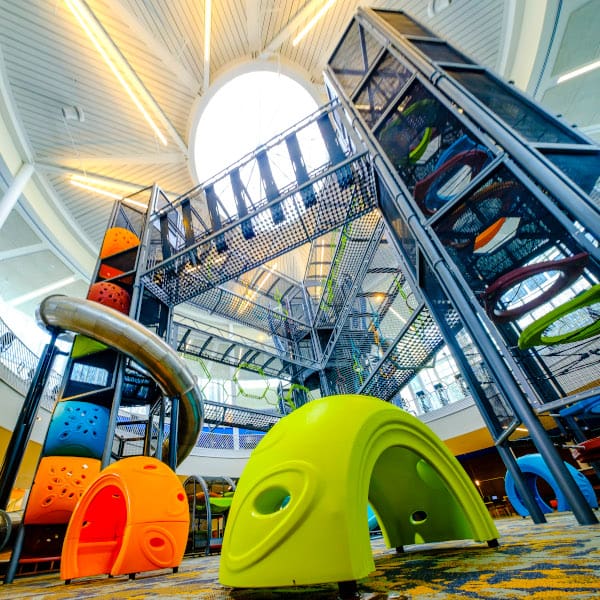
How to Plan an Indoor Playground for Amusement Parks and Family Entertainment Centers
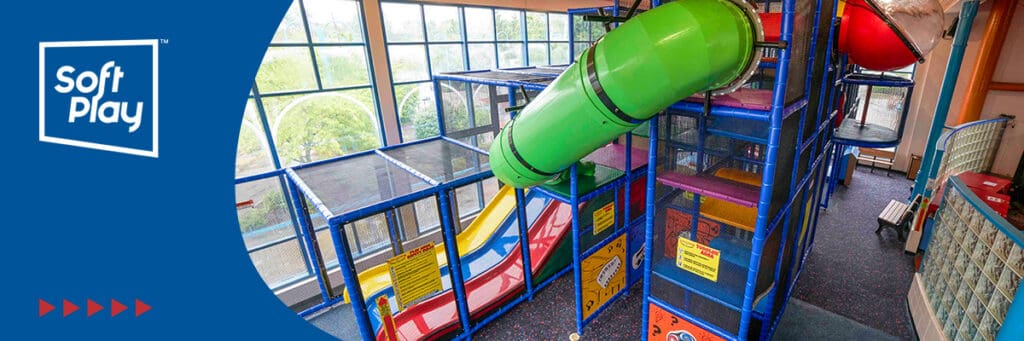
How to Plan an Indoor Playground for Amusement Parks and Family Entertainment Centers
Weather is a factor that outdoor amusement park and family entertainment center operators can’t control. Attendance often drops during storms, heat waves or cold snaps, directly affecting revenue and ticket sales. Indoor playgrounds give guests a reliable, weatherproof place to play, maintaining steady foot traffic even when conditions outside aren’t ideal. It enhances the visitor experience, creates new revenue opportunities and encourages families to stay longer.
With thoughtful design and a creative mix of attractions, an indoor playground can deliver a fast return on investment by increasing in‑park spending and supporting future season pass sales.
Pros of Planning for an Indoor Amusement Park or FEC Playground
Introducing an indoor playground can bring a range of financial benefits. Park owners who understand the long‑term value will make more confident investments.
- All seasons solution: An indoor playground is a reliable, all‑weather attraction that keeps families on-site when rain, heat or cold would otherwise cut visits short. Longer stays can translate into steadier revenue, even on days when outdoor rides can’t operate at full capacity.
- Diverse business model: Opening an indoor playground provides the chance to build a business model that extends beyond food and drink sales, such as selling memberships and hosting kids’ birthday parties.
- Differentiated play: Designing an indoor playground offers the opportunity to create one-of-a-kind experiences. Thoughtful indoor playground design may also include seating and “pause points” where parents can relax while their kids play.
- Burn off energy: A dependable, year-round attraction offers parents a place to let their kids blow off steam, become more active and use their imaginations.
- Appeal for varying ages: An indoor playground will likely attract kids of all ages to have fun. Parents can bring children across different age groups to explore the activities all in one place.
Strategic Plans and Site Assessment
Introducing an indoor playground can be a complex project. Planning requires precise attention to design details, ensuring a natural flow for visitors and minimizing disruption to your day-to-day operations during the build.
Retrofit vs. New Build Strategies
First, assess your available space, budget and long-term goals to determine whether your indoor playground will be a retrofit or a new build.
- Retrofit: Does your park already have an underused area to transform into an indoor playground? Retrofitting typically reduces construction time and up-front costs, and existing access to power, plumbing and restrooms will streamline the project. Convenient restroom access can increase dwell time by nearly 48%, making retrofits especially attractive from a revenue standpoint.
- New build: While starting from scratch has higher up-front expenses, it gives you complete control over the layout, design and guest experience. Consider how the indoor playground will integrate with the rest of the park’s traffic flow and operational needs.
Capacity Plans
Most guests will want to head inside if inclement weather arrives. For safety reasons, your playground must comfortably accommodate the planned capacity.
- Prioritize throughput: How many guests do you expect will move through the indoor playground every hour? Entry and exit points influence how efficiently people circulate. Keeping these routes separate reduces congestion and minimizes safety conflicts, especially during peak periods.
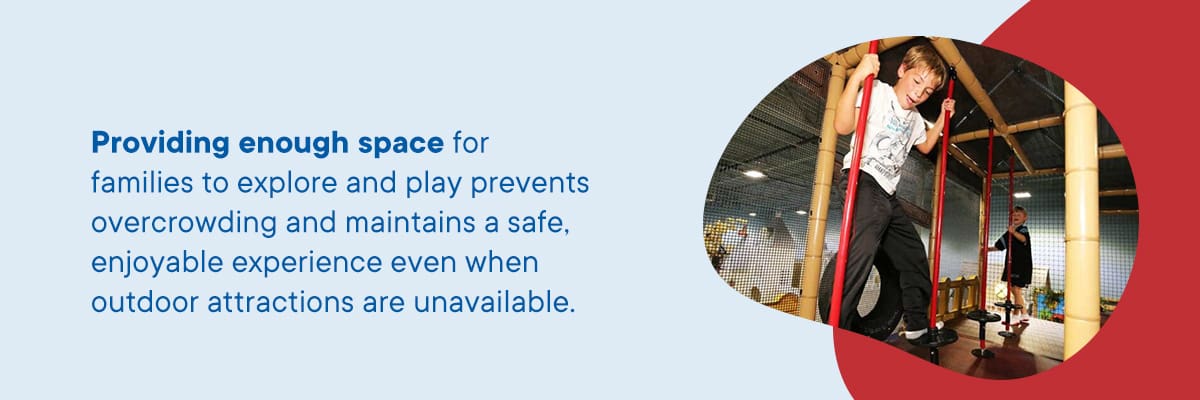
- Plan for peak conditions: Use your busiest weather‑impacted days as the benchmark for space allocation. Providing enough space for families to explore and play prevents overcrowding and maintains a safe, enjoyable experience even when outdoor attractions are unavailable.
Storage and Pause Points
Aside from prioritizing safety, the playground and building layouts must complement one another to boost visitor satisfaction and maximize revenue opportunities. Your indoor playground may experience dwindling visitor numbers if you lack a strategic floor plan.
- Storage locations: Designated spots for bags and other personal items keep walkways clear and reduce tripping hazards. Cubbies or lockers also streamline transitions in and out of the play area, helping staff maintain order during busy periods.
- Parent supervision zones: Well‑placed viewing areas with unobstructed sight lines let parents keep an eye on their kids while they play. Add plenty of comfortable seats and a nearby snack bar for additional family-friendliness.
Design an Immersive Indoor Playground for Amusement Parks or FECs
An indoor playground must become an extension of your outdoor amusement park or family entertainment center to keep your offerings cohesive. Visitors who have a consistently enjoyable time throughout their first visit will be more likely to return.
Custom Themes and Brand Integration
Integrating a motif that aligns with your park’s values elevates the visitor experience.
- Choose a compelling theme: Your indoor playground should feel like a natural extension of the park. When the visual language, storytelling and guest expectations match, your guests will perceive the entire property as more immersive and intentional.
- Maintain design coordination: Your amusement park or FEC already tells a story through its rides, architecture and branding. The indoor playground should continue that narrative so guests experience a seamless transition from outdoor attractions to indoor play.
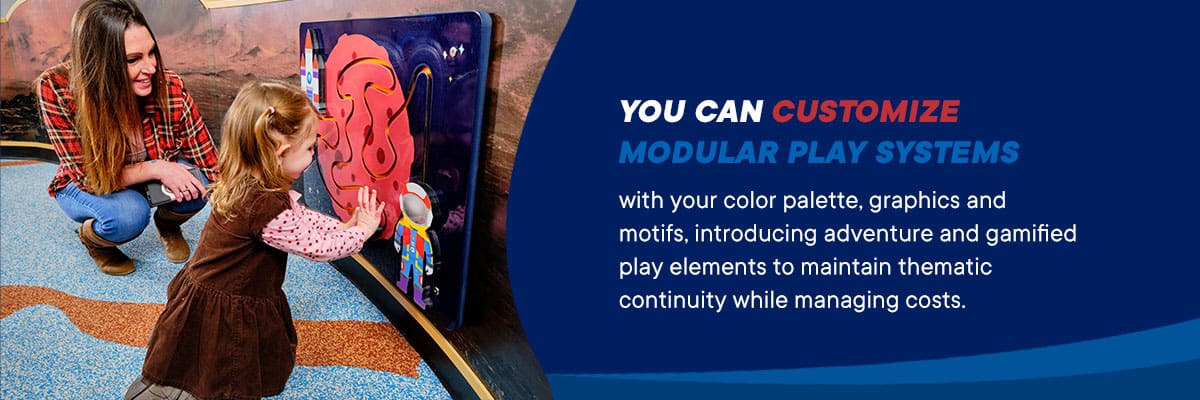
- Blend custom additions: You don’t need to design every play element from scratch to achieve a connected look. You can customize modular play systems with your color palette, graphics and motifs, introducing adventure and gamified play elements to maintain thematic continuity while managing costs. This approach balances creativity with practicality and ensures the playground feels purpose‑built for your park.
Build Play Zones
Creating distinct zones ensures your indoor playground feels welcoming for kids of all ages and abilities.
- 0 to 3 years: Features such as soft materials, like cushioned floors and lower platforms, can comprise a toddler zone. This part of the playground may also include other elements, such as sensory and textured toys.
- 4 to 8 years: Kids in this age range are more likely to use engaging play areas that encourage exploration and independent thinking. To attract this group, you can add more advanced activities and structures, such as a climbing wall or miniature obstacle course.
- 8 to 12 years: Indoor playgrounds can also include a dedicated area that matches preteens’ energy level and interests. Features like trampolines, agility challenges or obstacle courses give older kids a place to play independently while their younger siblings enjoy age‑appropriate areas. Creating this separation helps families stay together longer, reduces crowding in toddler zones and ensures every age group has a space that feels engaging and safe.
Maximize the Available Space
Expanding your indoor playground across multiple floors, rather than relying on a single‑level footprint, will give you more space to add desirable features and amenities. While purpose‑built construction offers full design freedom, it also comes with higher costs and longer timelines. It’s worth evaluating all your options before committing to a new building. For example, existing structures such as unused storage areas may offer opportunities for expansion without the expense of a full new build. Creative reconfiguration can often deliver the freedom you need to build at a fraction of the cost.
- Go vertical: Expanding the playground upward lets you comfortably accommodate taller play structures such as climbing nets, slides and walls. Stacking play zones vertically can also significantly increase usable square footage within a smaller footprint. Multilevel structures create natural separation between age groups and activity types, improving traffic flow and safety.
- Balance the footprint with your operational needs: Whichever approach you choose, design a layout with unobstructed sight lines and plenty of room to circulate. The goal is to maximize space without compromising the guest experience.
Playground Budgets and ROI
Before breaking ground on a new project, determine how long it will take to recoup your initial investment. Adding an indoor playground to your amusement park or family entertainment center is a significant undertaking that requires meticulous planning to earn revenue.
Capital Expenditure vs. Operating Expenditure
Effective budgeting starts by determining the indoor playground’s cost structure, which includes the capital investment required to build the space and the ongoing operating expenses needed to keep it running safely and efficiently.
- Capital expenditure: Up‑front costs typically include playground equipment, installation, materials, labor and required safety upgrades. Additional expenses — such as flooring, surfacing, HVAC modifications and new lighting — ensure the space meets safety standards and creates a durable, long‑term addition to your park’s offerings.
- Operating expenses: Once the playground opens, ongoing costs include insurance, routine maintenance and staff to supervise the space. Indoor playgrounds generally require fewer personnel than outdoor attractions because they involve fewer mechanical components, keeping operating expenses manageable over time.
Drive Membership and Season Pass Sales
A well-planned indoor playground can be an excellent recurring revenue source. Beyond encouraging guests to spend more money on food, beverages and souvenirs, playground value can translate into season passes and frequent visits.
- Visitor demand: A well‑designed indoor playground gives families a reliable, weatherproof reason to visit, helping your park maintain steady attendance even on days when Mother Nature forces you to close outdoor rides.
- Season pass value: Adding an all‑weather attraction increases the appeal of season passes by giving guests more opportunities to use them year‑round. Data shows that pass holders visit far more frequently — about 4.9 times per year compared to 1.3 visits for non‑pass holders — making indoor playgrounds a driver of recurring revenue.
Partner With a Playground Expert for Success
Indoor playgrounds require specialized knowledge in safety standards, structural requirements and guest‑flow planning to bring them from concept to reality — areas where in‑house or DIY approaches often fall short. Work with an experienced provider who will follow local codes and meet your park’s operational needs. A professional partner should also help you avoid compliance issues or design missteps that could compromise safety or diminish the guest experience.
Maintain Safety Compliance
Much like with outdoor attractions, compliance is a necessity for indoor playgrounds. Your project partner has an obligation to meet standards during design and installation.
- ASTM F1918: Choose a partner who is familiar with the widely recognized American Society for Testing and Materials F1918 standard, which outlines performance and safety standards for soft contained play equipment.
- Brand protection: No matter how minor, a single incident can adversely affect your amusement park or FEC and visitor perception. Look for a company that prioritizes safety, completes quality testing and can document compliance.
The Turnkey Installation Process
An efficient playground build shouldn’t disrupt your park’s day-to-day operations. Working with a turnkey installation partner keeps the park’s operating times stable during a significant change.
- Reducing downtime: Experienced companies know how to plan, stage and construct a playground to minimize downtime, keeping your amusement park or FEC operational and generating revenue.
- Speedy installation: A turnkey installation partner understands the time constraints your amusement park faces to meet deadlines and keep revenue flowing. Existing knowledge of an indoor playground’s structural requirements enables shorter construction timelines and a lower likelihood of errors.
How to Add an Indoor Playground to an Amusement Park or Family Entertainment Center
Offering an indoor playground is an opportunity to expand your revenue streams and keep your amusement park active during off-peak seasons and unpleasant weather. With a strategic plan and plenty of enthusiasm, your indoor playground can become a primary attraction alongside your outdoor activities. Follow the checklist below to guide your project.
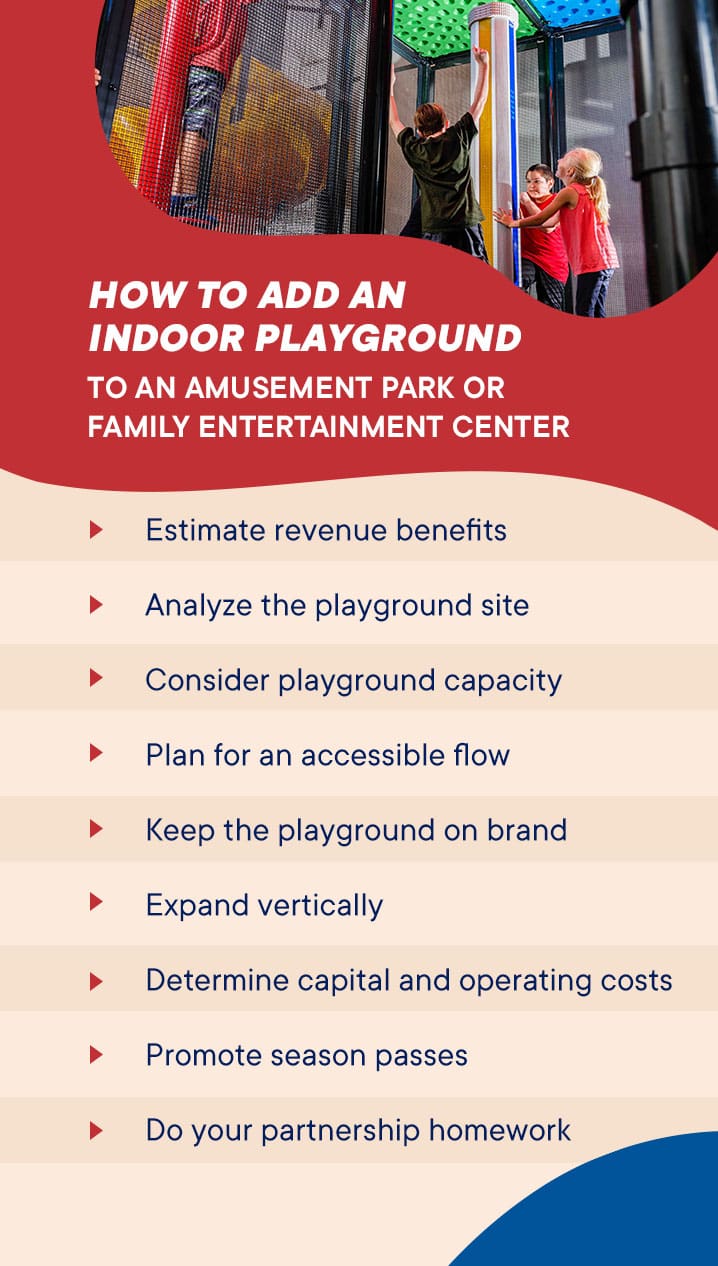
- Estimate revenue benefits: Quantify the financial upside of adding a year-round, all‑weather attraction by comparing projected playground revenue with the losses you currently experience when outdoor conditions drive visitors away.
- Analyze the playground site: Determine whether it is feasible to retrofit an existing space or if a purpose‑built structure is the better long‑term solution.
- Consider playground capacity: Size the space to support expected peak‑day attendance and ensure guests can move, play and supervise comfortably.
- Plan for an accessible flow: Prioritize safety by designing clear circulation paths, adequate storage and separate entrances and exits to reduce congestion.
- Keep the playground on brand: Maintain thematic and visual continuity with the rest of the park so the indoor space feels like a natural extension of the guest experience.
- Expand vertically: Use a multilevel layout to increase usable square footage and incorporate tall features like climbing nets or slides without expanding the building footprint.
- Determine capital and operating costs: Outline up-front equipment and construction expenses alongside ongoing staffing, insurance and maintenance needs to build a realistic budget.
- Promote season passes: Position the indoor playground as a year-round benefit to increase passholder value and encourage more frequent visits.
- Do your partnership homework: Choose an experienced playground provider with expertise in safety compliance, design integration and turnkey installation to ensure a smooth, code‑compliant build.
Confidently Build Your Indoor Playground
Indoor playgrounds have the potential to become successful revenue streams for amusement parks and family entertainment centers, with increased dwell time and additional visits for fun indoor activities. Soft Play® has more than 40 years of experience bringing adventurous playground design to life.
Our passionate team will work closely with you to build a compliant playground that boosts your park’s reputation and allows visitors to enjoy it for years. Start your project today by requesting a consultation with our expert designers.