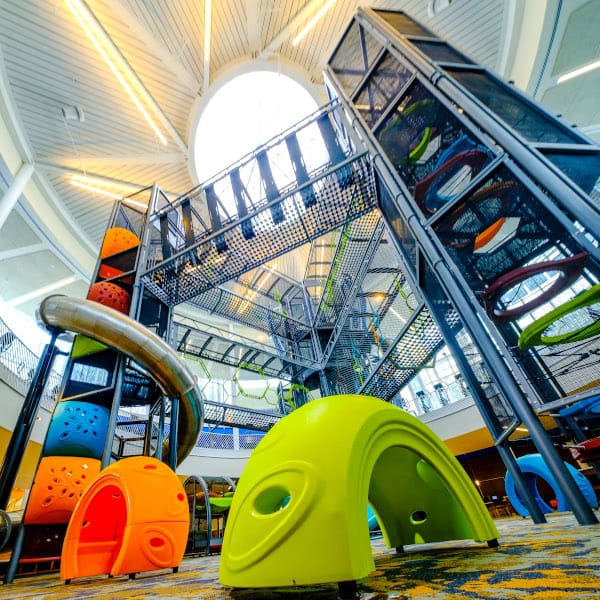
How Amusement and Theme Parks Help Child Development
How Amusement and Theme Parks Help Child Development
Amusement and theme parks may appear to be pure fun from the outside, but beneath the bright lights and laughter, they are dynamic areas for growth. Every ride, play zone and interactive space presents an opportunity for kids to learn, adapt and thrive.
These play areas invite kids to test their limits, explore new challenges and connect with others, all while building essential life skills.
Discover how theme and amusement parks help child development.
1. Boosts Cognitive Skills
Amusement and theme parks help kids develop cognitive skills in subtle yet meaningful ways. They create experiences that support how they plan, adapt and interpret the world around them.
Sharpens Problem-Solving Abilities
Choosing which ride to try, figuring out how to climb a play tower or tackling the quickest route through a maze requires kids to weigh options and plan ahead. These moments develop critical thinking and executive function, the ability to solve problems and make decisions.
Themed play areas with ropes to climb, tunnels that twist and bridges that loop back in unexpected directions require testing and adjusting until kids reach their goals. Because these challenges are playful and exciting, kids are engaged and practice problem-solving naturally.
This type of thinking strengthens flexibility, too. When one approach doesn’t work, kids quickly adapt and explore another. That habit of adapting with ease builds essential skills they’ll rely on in schoolwork, team projects and everyday tasks.
Enhances Sensory Processing
Another way theme parks help child development is by immersing kids in a rich sensory environment. Vibrant murals, flashing lights, upbeat music, shifting textures underfoot, and the sensation of motion from swings or slides create a full spectrum of experiences for the senses to process.
Tackling this environment helps the brain practice sensory integration — the process of gathering information from multiple sensations — so kids can respond effectively to their surroundings. A kid climbing through a structure while music plays and other kids move around them teaches them to prioritize what matters and keep their actions coordinated.
Kids who practice processing diverse sensory input in play may better adjust in busy sports environments or remain calm in stimulating public spaces.
2. Builds Stronger Bodies
Amusement and theme parks are motion-packed. From climbing to crawling and jumping to sliding, these spaces cultivate motor skills kids need for confidence and health.
Develops Gross Motor Functions
Activities like jumping on trampolines or balancing on beams engage the large muscle groups that form the basis of gross motor skills. These big movements build core strength, improve posture and enhance coordination.
Because the environment is playful, kids approach these physical challenges with excitement. For example, racing across an obstacle course strengthens a child’s legs, arms and trunk. The variety of activities also promotes endurance, because kids spend extended periods of time in motion, learning to sustain energy while exploring and playing.
This type of physical engagement can maintain long-term health because gross motor skills support everything from running in sports to maintaining balance in everyday life. These skills build stronger bones and, when developed with joy, a positive association with movement.
Refines Fine Motor Coordination
Theme parks nurture small actions that build fine motor coordination. Gripping handles on a ride or pulling ropes to swing across a structure requires dexterity and control. These actions strengthen finger and hand muscles while reinforcing hand-eye coordination.
Kids who practice gripping and pulling in the park may improve skills needed for everyday tasks such as writing or tying shoelaces. Themed play areas provide kids with repeated meaningful practice by embedding these movements in a fun environment.
3. Improves Social Skills
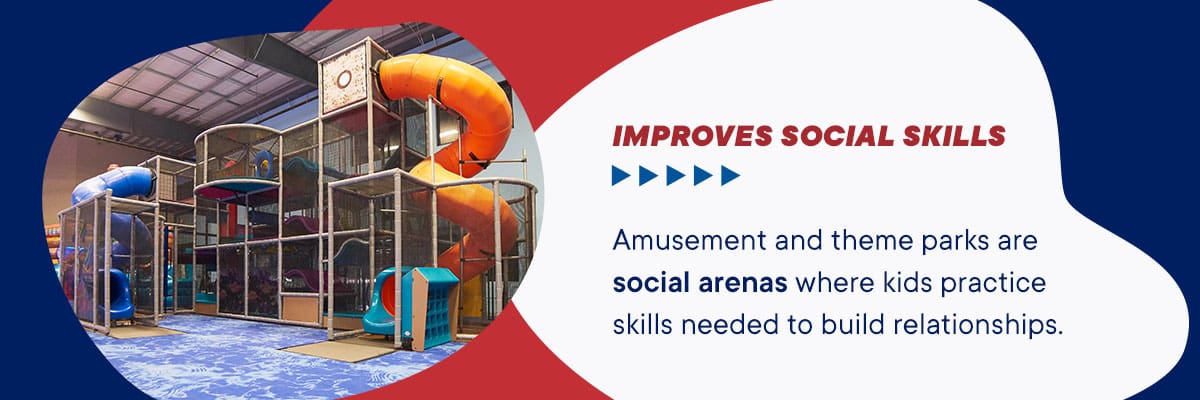
Amusement and theme parks are social arenas where kids practice skills needed to build relationships. They learn to wait, cooperate, communicate and connect with others. Here are some of the social benefits of children’s amusement centers.
Teaches Cooperation and Patience
Waiting in line for a ride teaches kids patience. Standing with peers until it’s their turn reinforces the concept of fairness and introduces the idea that everyone shares access to the same experiences. An understanding of turn-taking supports classroom dynamics, sports participation and group activities.
Slides or interactive play equipment deepen this learning. Kids realize they should cooperate and share if everyone is to enjoy themselves. These moments enable collaboration and compromise because they practice fairness in a fun context, gaining the tools to handle teamwork in other areas of life.
Improves Communication and Empathy
Play areas strengthen the way kids communicate with one another. Group play requires asking for a turn, offering help or suggesting a game, and relies on nonverbal cues like gestures, facial expressions and tone. These interactions teach kids how to express themselves and learn to interpret others’ signals.
Theme parks bring together kids from diverse backgrounds, which exposes them to different emotions and perspectives that may foster empathy. Observing a peer’s nervousness before a ride or celebrating someone’s excitement helps kids recognize, acknowledge and respond to the emotions of others. This practice builds emotional intelligence.
4. Fosters Emotional Growth and Confidence
Amusement and theme parks contribute to kids’ emotional development. These environments create safe opportunities for kids to experience challenges, manage emotions and build confidence in their own abilities.
Helps Kids Face and Overcome Challenges
Some rides and play structures stretch comfort zones just enough to feel thrilling. A tall climbing wall or a twisting slide gives kids a chance to confront their own apprehension. They also learn to recognize fear, regulate it and take action.
When a child completes a ride or reaches the top of a structure, they may experience a sense of achievement. Overcoming self-imposed challenges helps reinforce self-esteem and strengthen confidence, enabling kids to learn that they can handle discomfort and emerge stronger.
Builds Resilience and Independence
Not every park experience may go perfectly, but those minor setbacks carry developmental value. For example, a kid who discovers they are not yet tall enough for a ride learns to handle disappointment.
Amusement parks help child development by giving kids room to make their own choices. Deciding which activity to try next or choosing how to navigate a play structure helps them practice independence. With each decision, they learn to trust their judgment.
Design Amusement and Theme Parks That Help Develop Healthy Kids
When kids step into amusement and themed parks, their imagination runs wild. Immersive and interactive play areas invite them into deeper play that fosters problem-solving, coordination, communication and confidence. Creative and safe designs can enhance these benefits.
Soft Play® has over 40 years of experience creating innovative spaces that entertain and encourage healthy growth. From contained play areas to full-scale theme parks, we work with you to customize safe solutions that fit your budget, space and the age groups you serve.
Our team builds every structure to rigorous safety standards, backed by quality manufacturing and thorough testing. We also support you with sales guidance and maintenance services.
Contact us today to schedule a free design consultation.