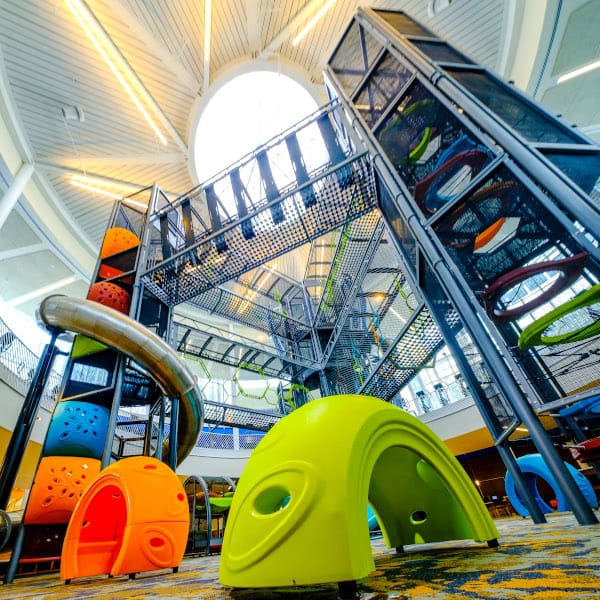
Which Playground Design Style Is Right for Your Business?
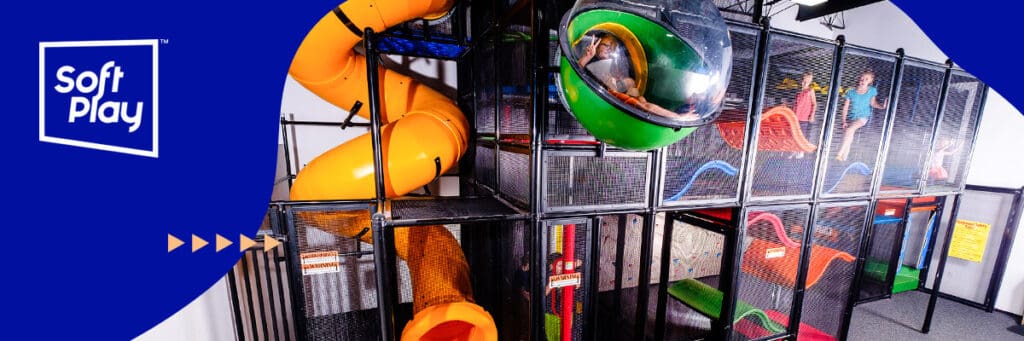
Which Playground Design Style Is Right for Your Business?
Business owners often face many playground options, ranging from simple foam setups to complex interactive systems. The sheer volume of choices makes it difficult to align design decisions with brand positioning, budget limits and spatial realities. That indecision frequently leads to poorly matched installations that fail to attract visitors or support sustainable revenue.
Taking an intentional approach to your playground design style removes that friction. When equipment selection reflects how a space operates and who it serves, play becomes a driver of attendance, longer sessions and repeat visits. Learn how to make strategic playground choices that close engagement gaps, improve circulation and turn play areas into productive business assets.
Why Playground Design Is a Strategic Business Decision
Playground design is a direct factor in how long families stay and how much they spend. Repeatable play keeps kids engaged while caregivers stay comfortable, extending dwell time beyond just the main activity. Longer visits often lead to:
- Additional food and beverage purchases.
- Increased browsing of nearby retail services.
- More add-on activities and impulse spending.
Design also differentiates venues in crowded markets. When many operators use similar systems, a unique design style attracts people and makes a venue feel deliberate rather than an afterthought.
Financially, playgrounds perform best as revenue-supporting assets. Strategic design can:
- Drive repeat visits and memberships.
- Support premium pricing for parties and groups.
- Open up sponsorship and brand partnership opportunities.
- Contribute directly to lease value and return.
5 Modern Playground Design Styles That Drive ROI
Modern playground design styles should align with specific business outcomes. Each approach influences the audience mix, movement patterns and return frequency in different ways.
Understanding where each style fits and what it requires operationally allows you to select a design that supports your commercial model.
1. The Immersive and Themed Experience
An immersive, themed playground is designed to feel as if you’re stepping into a different world. The entire space follows one theme, such as a jungle, space mission or adventure landscape. Walls, structures, colors, lighting and sound all work together so the playground feels like a cohesive environment rather than just a collection of equipment.
The layout follows a clear journey. For example, kids will:
- Enter through a calm, welcoming area that introduces the theme.
- Move into more active play zones where the main adventure happens.
- Finish in quieter areas where the family can pause, watch and regroup.
2. Gamified and Tech-Integrated Play
Gamified and tech-heavy playgrounds turn physical movement into structured, goal-driven play. Kids jump, climb or touch elements and receive immediate feedback through lights, sounds, visuals or scoring. This design creates an experience that feels more like a physical game than free play.
Design begins with interaction logic, such as:
- Defining which actions trigger responses, like speed, accuracy, coordination or cooperation.
- Setting clear objectives such as completing sequences, beating timers or unlocking effects.
- Building fast reset points that encourage repeated attempts.
3. Adventure and High-Action Zones
Adventure and high-action zones focus on vertical movement and physical challenges. These designs center on climbing, traversing, balance elements and overhead routes that test strength, coordination and confidence while operating within defined safety systems. Risk feels real, which adds a thrill, but it’s all controlled through layout and structure.
Rather than isolated features, this design relies on route-based planning, which:
- Creates multiple paths with clear difficulty progression.
- Allows routes to intersect so groups can split up and reconnect.
- Maintains clear entry points, exits and supervision sight lines.
4. Nature-Inspired and Biophilic Design
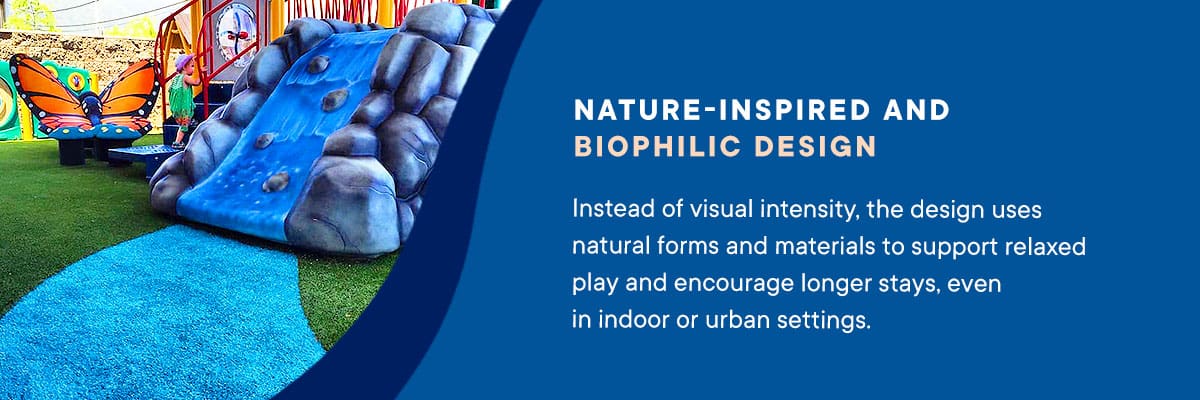
Nature-inspired and biophilic playgrounds draw from outdoor environments to create spaces that feel calm and comfortable. Instead of visual intensity, the design uses natural forms and materials to support relaxed play and encourage longer stays, even in indoor or urban settings.
The design emphasizes connection to the surroundings by:
- Shaping structures to resemble landscapes rather than rigid geometry.
- Using natural textures, muted colors and warm materials.
- Aligning play areas with available light, views and nearby green space.
5. Inclusive and Sensory-Rich Spaces
Inclusive and sensory-rich playgrounds are designed so kids with different abilities, sensitivities and engagement styles can participate comfortably in the same environment.
These spaces balance activity and regulation. Kids can move easily between higher-energy play and quieter interaction as needed, which supports longer stays and repeat use. The focus is on shared play with a variety of choices, allowing kids to engage at their own level rather than separating accessibility into a single area.
This kind of design typically includes:
- Wide, step-free routes that support wheelchairs, walkers and strollers.
- Low-transfer platforms and ramps that can be used from seated or standing positions.
- Sensory elements like textured panels, gentle motion features, light-up components and sound elements.
- Calm zones with soft seating, enclosed nooks or visual barriers where kids can reset without leaving the play area.
How to Design an Indoor Playground
Designing an indoor playground is a business decision, not just a matter of equipment selection. Each choice should support defined outcomes tied to visitor behavior, revenue and brand positioning. A clear process helps prevent trend-driven decisions and keeps the space aligned with how it needs to perform.
Define Business Outcomes
Start by identifying what the playground needs to deliver. A single space can’t be optimized for every goal, so your priorities must be specific.
Primary outcomes usually fall into one category. These may include:
- Increasing food and beverage spend by extending family dwell time.
- Driving admissions or ticket revenue as a core attraction.
- Anchoring a property with experience-led traffic that supports leasing or sponsorship.
Once you’ve determined the primary outcome, define secondary goals, such as parties or weekday use. Link every goal to observable behavior. If a feature doesn’t support your defined outcome, refrain from including it.
Map User Groups and Visit Patterns
Next, define who will use the space and when. Playgrounds underperform when all ages share one area without any differentiation.
Most playgrounds are designed to serve a mix of:
- Toddlers and preschoolers who need proximity, softness and repetition.
- Primary school kids who need challenge and social play.
- Tweens who respond to intensity and independence.
Overlay timing patterns such as weekday caregivers, after-school spikes or weekend family visits. These insights guide zoning and transitions between calm and active areas. The result should be a clear zoning brief that explains how different groups coexist without conflict.
Choose Between Custom Design and Modular Systems
Only focus on design after you’ve defined your goals and users. Modular systems offer speed and predictability. They suit smaller footprints or secondary amenities. The limitation is sameness, with reduced control over flow and brand expression.
Custom designs treat the space as a single experience. Circulation, supervision, seating, acoustics and revenue are planned together, allowing you to:
- Shape entry and exit paths past revenue points.
- Separate age and energy zones deliberately.
- Express brand identity through layout and form rather than signage.
When play supports the core business, custom flow delivers the strongest long-term value.
Mix Styles for Maximum Impact
Relying on a single playground style may limit who visits and how long they stay. Mixing styles allows one environment to serve different ages, energy levels and visit patterns while maintaining a coherent circulation plan. The playground should operate as a single system, layering styles where they complement each other rather than compete. This approach helps:
- Expand audience reach by accommodating different age groups and activity preferences.
- Extend dwell time by offering multiple experiences within a single visit.
- Improve circulation by guiding movement through varied but connected zones.
Partner With Soft Play® for Your Playground Design Styles
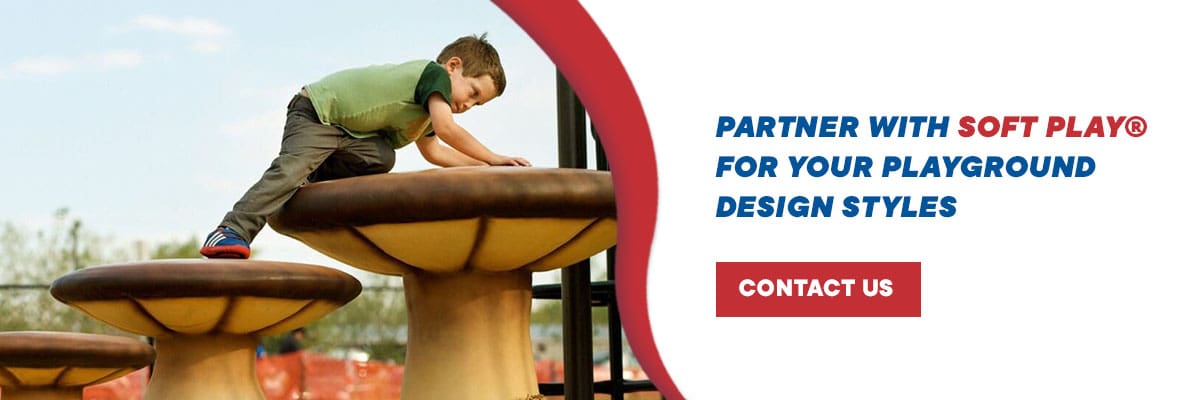
Choosing the right playground partner shapes long-term performance as much as the design itself. Soft Play works with owners, operators and developers to create turnkey playground solutions that move from concept through installation with commercial durability in mind.
Custom design, precise color matching and materials built for high-traffic environments allow each playground to align with brand standards while supporting consistent use over time.
Contact Soft Play for a free design consultation to discuss how the right playground design style can support your space, audience and commercial goals.