Why Every Pediatric Waiting Room Needs a Play Area
Why Every Pediatric Waiting Room Needs a Play Area
A visit to the doctor can be a stressful experience for young children and their families. Pediatric waiting rooms often have unfamiliar sights, sounds and smells that can increase a child’s discomfort. When children navigate these new environments, they may become upset, stressed or restless, impacting the waiting room atmosphere and making the waiting room experience less enjoyable for everyone.
Thankfully, there is a simple solution. Adding a thoughtfully designed play area can transform the waiting room into a child-friendly space that kids love. Age-appropriate toys and play areas allow kids to regulate their emotions, distract from worries and lean into imaginative and creative activities. Making play a central part of the pediatric waiting room empowers healthcare providers to ease anxiety, support healthy development and create more positive experiences for everyone.
The Importance of Waiting Room Toys for Children
Kids between 6 months and 4 years old are most likely to experience doctor office anxiety. During this time, kids are rapidly developing and learning, and medical environments can have unfamiliar sights and sounds that frighten them. Many kids also associate medical environments with pain resulting from previous experiences with shots or procedures.
Waiting rooms and offices can also cause sensory overloads for children. Bright lights, strong smells and crowded spaces can create an intense experience for a kid. In some cases, a kid might have a specific medical-related phobia, such as the fear of pain, blood or needles, amplifying hospital anxiety.
Although this fear of medical environments is a natural response, it’s important to understand the causes of anxiety and offer solutions for easing concerns. Creating opportunities for play in pediatric healthcare environments can distract kids from negative feelings. Age-appropriate toys can make wait times feel shorter and create a sense of normalcy in an otherwise unfamiliar environment.
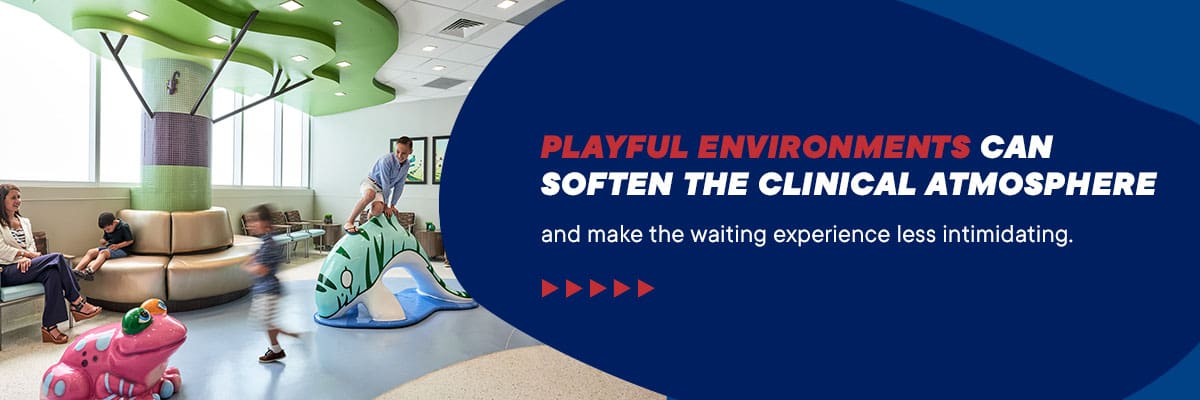
Creating child-friendly spaces can reduce perceived threats by making medical spaces more than a place for “scary” things. Playful environments can soften the clinical atmosphere and make the waiting experience less intimidating. Furthermore, a kid may be more likely to develop positive memories of a doctor’s visit if they’re having fun or feeling relaxed in the waiting room, which can reduce overall medical fears and make future visits easier for parents and providers.
Improving Mood and Keeping Kids Calm
Kids are naturally curious and energetic, which can be problematic when parents expect them to sit quietly with nothing to do. Prolonged periods of quiet and inactivity in waiting rooms can cause boredom and frustration, sometimes resulting in tantrums or tears. Play areas and toys offer a distraction from long wait times and encourage children to turn restless energy into creative activities or constructive play. Physical play with toys like building blocks can help children release nervous energy, while puzzles and coloring activities can soothe the mind.
Incorporating play elements can also give kids a sense of control they may otherwise feel they’ve lost in medical environments. Play areas give children choices, like what to play with, how to play and whether they want to play independently or with others. The sense of autonomy can help kids feel less overwhelmed and more secure.
Encouraging Development Through Play
Play areas also support healthy development in several ways. Offering various activities helps kids build essential skills. A hospital waiting room play area can promote:
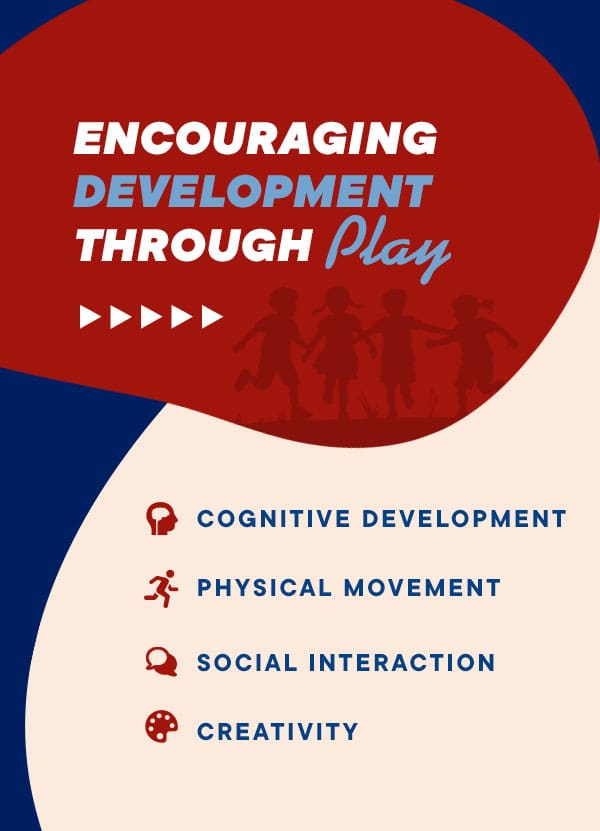
- Cognitive development: Various toys and activities can support cognitive development. Building blocks, puzzles and board games can encourage problem-solving skills. Books and pretend play items can help kids expand their vocabulary as they ask questions and talk to their parents or other children. Card games and activity books can help children practice memorization and hone concentration.
- Physical movement: Kids strengthen their physical development when they use coordination and muscles during play. Running, climbing and jumping strengthen large muscles and balance, while grasping toys, drawing and cutting paper help kids refine fine motor skills.
- Social interaction: Shared play areas can be a great opportunity for social interaction among children. These spaces teach children how to cooperate with others, the importance of sharing and how to take turns. Interacting with others also allows children to practice listening and understanding social cues.
- Creativity: Open-ended activities and toys encourage kids to think outside the box and approach problems from different angles. Building sets and coloring stations promote creative thinking and allow kids to express themselves artistically. Pretend play items like dolls or play kitchens encourage kids to invent scenarios and tell stories, boosting imagination.
Reducing Stress and Easing Anxiety
Toys can be an emotional buffer for kids, allowing them to redirect their focus from medical concerns or phobias to enjoyable activities. Toys are familiar and comforting objects for kids, signaling that an environment is welcoming and kid-friendly. This familiarity can reduce anxiety resulting from unfamiliar sights and sounds.
Play elements can also offer a distraction from worry. When kids play with toys, their attention redirects from their fears to imaginative play or physical movement. This distraction can break the cycle of anxious thoughts and make wait periods feel shorter and less stressful. Tactile toys, like fidget toys, have been shown to help kids focus attention and energy. These toys offer a calming way to help relax, regulate and ground the mind and body.
Children also express themselves through play. Drawing, storytelling and pretend play activities allow kids to act out their worries and gain a sense of control over their emotions. This emotional release helps kids manage their anxiety in healthy and constructive ways. Children can also reduce physical stress symptoms through physical play, which can lower heart rates, reduce muscle tension and lower blood pressure.
Creating More Positive Experiences for Families
Waiting room play areas also offer benefits to other family members. When children are restless, anxious or bored, parents often feel stressed trying to keep them entertained or calm, especially in unfamiliar environments. Well-equipped play areas keep children occupied and less overwhelmed, helping parents relax and reduce their own tension.
Keeping kids engaged with play also frees up family members for important medical tasks, like completing paperwork and having conversations with staff. Medical visits often require parents to discuss sensitive topics and provide personal information, and play areas can keep kids distracted to prevent constant interruptions. This can create smoother check-in processes, ensure accurate information is shared between parties and allow parents to ask questions they may not want their child to hear.
Ultimately, a calm and happy child can set a positive tone for the entire visit. When parents feel their child is entertained and comfortable, they’re more likely to feel satisfied with their level of care and service. Positive waiting room experiences can improve a family’s perception of their healthcare provider and increase trust and the likelihood of returning for follow-up visits.
How Engaging Pediatric Waiting Rooms Impact Staff and Patients
The benefits of a play area can extend to everyone in the waiting room. When kids are uncomfortable or loud, the atmosphere can change for everyone nearby. Play areas offer opportunities to:
Reduce Noise and Disruptive Behavior
Thoughtfully designed play spaces can significantly reduce noise and disruptive behavior, benefiting staff and other patients. When children are anxious or bored, they’re more likely to become restless or engage in attention-seeking behavior like crying or yelling. These tantrums can quickly escalate, creating a stressful atmosphere for everyone.
Alternatively, play areas and toys offer a constructive outlet for a kid’s energy and curiosity, channeling their attention. As children engage in play, overall noise levels can decrease, making it easier for staff to communicate with other patients and minimizing distractions and disturbances.
Create a More Organized Environment
Play areas can contribute to a more organized and efficient waiting room environment. Without designated play spaces, toys and activities can wind up scattered throughout the waiting room, leading to clutter. When families must bring their own toys and activities to occupy children, additional complexities can arise as some toys may be too loud or involve many pieces or messy elements.
On the other hand, well-designed play spaces can contain play, making it easier to clean and keep organized. This organization also helps staff and parents quickly identify a child’s location to monitor their activities and reduce the risk of accidents or lost items. Overall, creating a more organized environment can make other patients more comfortable and streamline staff-related tasks.
Enhance Practice Reputation
Including a waiting room play area in medical environments can also enhance a practice’s reputation. Families notice and appreciate when clinics and hospitals go the extra mile to make kids feel more comfortable. Many parents will interpret a practice’s efforts to accommodate a child’s needs as a sign that the practice is thoughtful and family-friendly.
As families have more positive experiences in your waiting room, they’re likely to have increased satisfaction, offer word-of-mouth recommendations and make your office their preferred choice for future visits.
Types of Play Areas and Equipment to Consider
A well-designed waiting room play area will incorporate a mix of activities and play options. A variety of structures and play elements can suit a wider age range and ensure children have the opportunity to be social or independent as they see fit.
With the right equipment, your pediatric facility can promote:
- Quiet play: Quiet play areas help kids engage in low-energy and calming activities. These spaces can be beneficial for children who feel overwhelmed or anxious and can help waiting rooms keep noise levels low. Reading nooks and color stations are excellent ideas for quiet play. You can also incorporate puzzle and board games or building blocks to promote focused play.
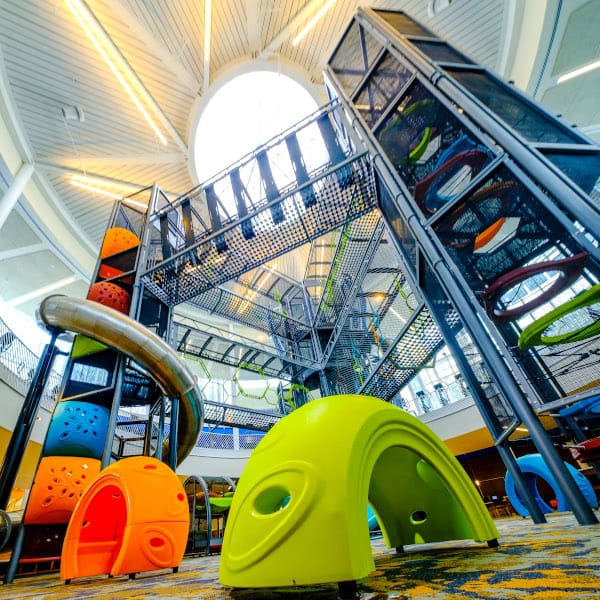
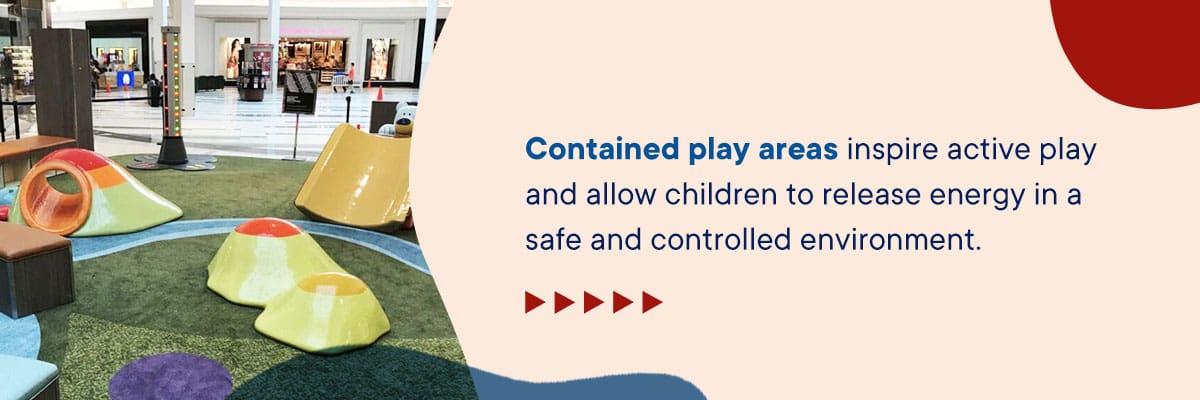
- Active play: Contained play areas inspire active play and allow children to release energy in a safe and controlled environment. Kids can let energy flow freely and flex their muscles with these active zones. These spaces can be especially beneficial for children who have trouble staying still for prolonged periods. Soft play structures like climbing blocks and small slides are great equipment ideas. Simple floor games like balance beams or hopscotch mats encourage coordination and balance. You can also incorporate age-specific elements, like toddler play equipment, if your office only treats children up to a certain age.
- Digital play: Digital play spaces incorporate technology to engage kids with interactive and educational content. These spaces are often more appealing to older children. Medical environments can incorporate motion-activated games, calming visuals or tablets with preloaded games and apps. However, it’s important to note that some parents prefer to limit their child’s screen time, so avoid offering only digital play options.
- Sensory play: These areas engage a child’s senses and provide stimulating experiences. Equipment like play panels allow children to explore and experiment with different materials, shapes and textures. You can play panels for games like tic-tac-toe, completing mazes and matching activities.
Creating Waiting Spaces That Kids Love
Interactive play spaces can make a huge impact on patient satisfaction, a child’s comfort and staff productivity. When designing a kid-centric waiting space, keep these tips in mind:
- Prioritize comfort: Start by making your waiting space physically and emotionally comfortable for children. A comfortable environment helps children relax and can set a positive tone for the entire visit. Use furniture and seating with inviting colors and comfortable textures and surfaces. Implement child-sized pieces and incorporate cheerful artwork and gentle lighting to make the space feel less clinical.
- Encourage expression: Give kids the chance to express themselves through various activities. Offer artistic opportunities through coloring, drawing, and cutting. Create a dedicated art station with paper, chalkboards or magnetic tablets for doodling and writing. Display previous patient artwork on your walls to celebrate creativity and encourage imaginative play.
- Include active play: Invest in active play equipment that allows children to move and be physically active. Even in a limited space, the option to jump or climb can help kids release nervous energy and reduce stress. Whether you incorporate floor games, interactive wall panels or play structures, be sure to find ways to provide safe outlets for movement.
- Make play inclusive: Your play area should be accessible and enjoyable for all children who come through your doors. Regardless of age or ability, each child should be able to enjoy the space and release energy or engage in imaginative play. If you cater to multiple age groups, implement signage to make the area easy to navigate and indicate age-appropriate activities.
- Keep safety and hygiene in mind: Any child’s space should have safety and hygiene at the forefront of design. Medical environments must pay special attention to these elements, as waiting rooms often accommodate people with sicknesses or germs. It’s important to incorporate equipment and activities that are easy to clean and disinfect. Equipment and games should also be free of hazardous materials, sharp edges or other dangers that could increase the risk of accidents or injury.
Build Your Pediatric Waiting Room Play Area With Soft Play®
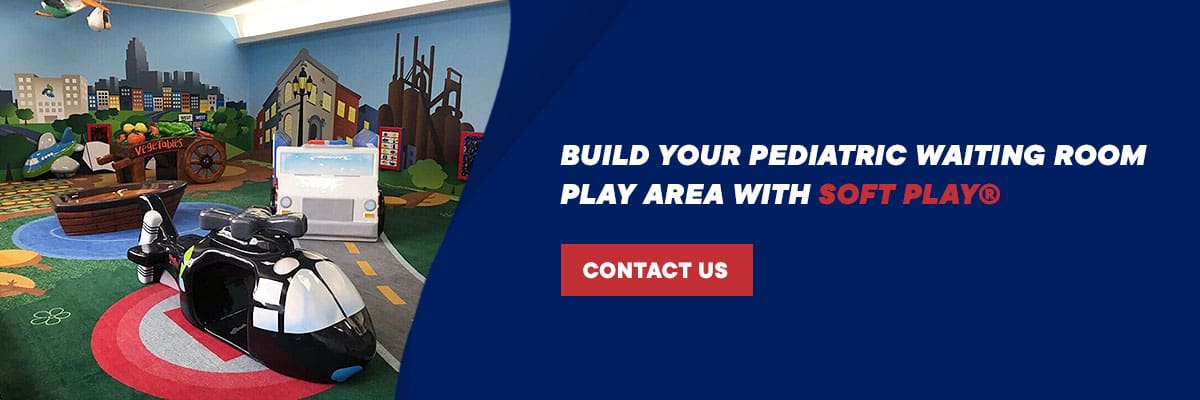
Soft Play has over four decades of experience helping organizations harness the power of play. We design play spaces that work for kids, parents and businesses. Our team is committed to providing safe and accessible solutions that encourage play and enhance experiences. We can customize play areas to meet all budgets and space availability, including your pediatric waiting room. Request a free design consultation to discover how we can help you design a space that kids love.