Tips for Designing a Play Cafe
Tips for Designing a Play Cafe
Family-friendly community spaces are in demand, and play cafes are a favorite destination for parents and kids alike. As more parents become aware that play is essential for kids’ healthy development, the popularity of expertly designed play spaces will continue to grow.
If you’re thinking of setting up a play cafe or renovating an existing one, thoughtful design is key to creating a space that delights kids, strengthens social bonds and drives business success. This guide offers actionable tips for planning your play cafe to help you create a facility that stands out.
First Steps in Planning Your Play Cafe
Before considering play cafe design details, it’s important to lay a strong business foundation. Careful planning at this stage will help you avoid costly mistakes and set your space up for long-term success.
1. Define Your Target Age Group
Clearly define your target audience. Will your space focus on toddlers, a broader range of kids or include dedicated areas for parents and caregivers? When designing a play cafe, understanding the developmental needs and interests of your chosen age group will help you create a play area that’s age-appropriate and engaging and sets the stage for a positive experience for every visitor.
2. Conduct Market Research
Thorough market research is essential before designing a play cafe. Start by:
- Analyzing local demographics to understand the families in your area.
- Understanding community needs by engaging with local nonprofits and your target group through surveys and interviews.
- Studying existing competitors to see what’s working for them so you can provide something even better.
This research will help you identify unique opportunities — like a lack of sensory-friendly spaces or themed play areas — that your cafe can offer. By filling these gaps, you can position your business as a must-visit destination for families in your community.
3. Establish a Business Model With Diverse Revenue Streams
Your main income sources will likely come from cafe sales. A great tip when planning your play cafe is to consider diversifying your revenue streams by offering:
- Birthday parties
- Classes or workshops
- Memberships and loyalty programs
- Retail space or pop-up shops
These additional services boost your bottom line and encourage repeat visits and customer loyalty. You can also explore partnerships with local businesses or schools to host group events, which expands your reach and community presence.
4. Allocate Budget for Build, Equipment and Operational Costs
Once you know how you’ll fund your business, careful budgeting is crucial to the long-term success of your play cafe. Account for upfront expenses like construction and equipment purchases and ongoing costs like maintenance, staffing and marketing.
Prioritize investments that will have the greatest impact on safety, engagement and customer satisfaction. By allocating your resources wisely, you’ll create an inviting and sustainable space in the long run.
Core Principles of Play Cafe Design
Building a play cafe involves more than play equipment. It should be a thoughtfully designed environment that supports active play, social interaction and parent relaxation.
Here are the core principles to guide your layout and design decisions:
- Balance active play zones with quiet areas: Create distinct spaces for both energetic play and quieter activities like reading or crafts. Use soft furnishings, partitions or acoustic panels to separate zones and manage noise.
- Ensure clear sightlines from seating areas to play structures: Parents want to easily supervise their kids without leaving their tables, so use open layouts and low barriers to maximize visibility and safety.
- Create an intuitive flow: Your play cafe design should have a welcoming, easy-to-navigate entryway that leads naturally to the main play and cafe areas with smooth transitions between zones.
- Design for durability and easy cleaning: Choose commercial-grade, easy-to-clean materials for flooring, furniture and play equipment that take into account robust play and high-traffic areas.
Setting up a Play Cafe for All Ages
To attract a wide customer base, your play cafe can offer engaging experiences for kids of all ages — and don’t forget the adults! Creating distinct zones for different offerings means every kid and their families feel welcome and included.
Designing the Cafe Area
A well-designed cafe offers parents and caregivers a comfortable, inviting place to relax, socialize and enjoy refreshments while their children play. Here’s how to create a cafe that enhances the experience for families.
Create an appealing menu:
- Offer snacks and meals kids will love, such as mini sandwiches, fruit cups, yogurt, cheese sticks and healthy baked goods.
- Include high-quality coffee, specialty teas, fresh pastries, salads, wraps and gourmet sandwiches to appeal to parents and caregivers.
- Provide gluten-free, nut-free and dairy-free options to accommodate dietary restrictions.
- Focus on menu items that are easy to prepare and serve, reducing wait times and keeping the cafe running smoothly.
- Consider themed treats, seasonal specials or “build-your-own” snack options for added fun.
Adapt furniture to your layout and theme:
- Comfortable seating: Choose a mix of seating options like cafe tables, booths and lounge chairs to accommodate different group sizes and preferences.
- Family-friendly features: Include high chairs, booster seats, easily cleanable surfaces and tables with rounded edges.
- Flexible arrangements: Use movable furniture to adapt the space for parties, group events or busy times.
Create a good flow between the cafe and play spaces:
- Use low partitions or glass walls for clear visibility between the cafe and play areas so parents can keep an eye on their kids.
- Design wide, unobstructed walkways that connect the cafe and play zones, making it easy for families to move between spaces.
- Use sound-absorbing materials and strategic seating placement to minimize noise from the play area.
- Make sure hot beverage stations and food prep areas are out of children’s reach.
- Use signage to guide families safely between zones.
Creating a Safe Toddler Zone
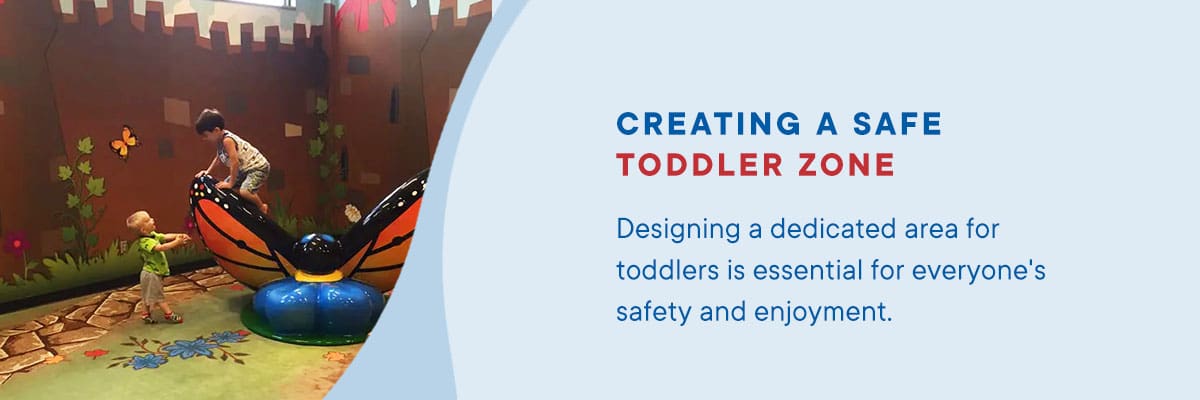
Building an Engaging Area for Older Kids
Older kids thrive on challenge and adventure, so it’s important to provide play structures that cater to their need for movement and social interaction. Include vertical elements like climbing walls and multilevel play structures to captivate the imagination.
Add features that encourage social and cooperative play, such as interactive obstacle courses or team-based games, and choose equipment that promotes gross motor skill development through running, jumping and balancing activities.
Including Adults in the Fun
The main focus of building a play cafe is kids, but creating opportunities for adults to participate or relax boosts the overall experience and encourages longer visits. Design comfortable seating areas with clear sightlines to the play zones so parents and caregivers can supervise while enjoying a coffee or snack.
Consider adding interactive elements that adults and kids can enjoy together. These could be family board games, interactive art walls or group activities. Providing amenities like free Wi-Fi, charging stations and healthy menu options means adults feel welcome and valued, making your play cafe a destination for the whole family.
How to Design a More Inclusive Play Environment
Inclusivity is an essential element of modern play cafe design. By considering sensory needs and accessibility, you can create a friendly space for all families. Here are some strategies to minimize overwhelming noises and create a calming atmosphere:
- Install sound-absorbing panels, carpets or ceiling tiles to minimize echo and background noise.
- Use soft dividers or curtains to separate noisy and quiet zones.
- Make sure all areas are wheelchair accessible.
- Opt for adjustable, indirect lighting. Avoid harsh fluorescents.
- Choose soothing color palettes and avoid overly stimulating patterns.
- Create small, cozy spaces with soft seating, dim lighting and calming sensory toys and tools.
- Offer sensory-friendly hours or events for families who need a gentler environment.
Choosing Your Theme and Equipment
A memorable theme and the right equipment can set your play cafe apart. This section helps you move beyond surface-level decor to create a truly immersive and adaptable play experience.
Integrating a Theme With Play Structures
When designing a play cafe, select play equipment that captures a theme — a jungle, a cityscape, an underwater world or something unique — so each structure’s form and function contribute to the overall atmosphere. Custom graphics, vibrant or pastel colors, and creative shapes can be used throughout the space to reinforce the theme, making the environment immersive and memorable for kids and parents.
Modular Equipment for Future-Proofing Your Space
Modular equipment can be easily reconfigured, expanded or updated as your business grows or as play trends change. This flexibility allows you to refresh your space with minimal disruption and cost so your cafe remains exciting and relevant for returning families. Planning for easy updates from the start helps you adapt to changing needs and keeps your play area a dynamic destination.
Open-Ended Play Equipment That Encourages Creativity
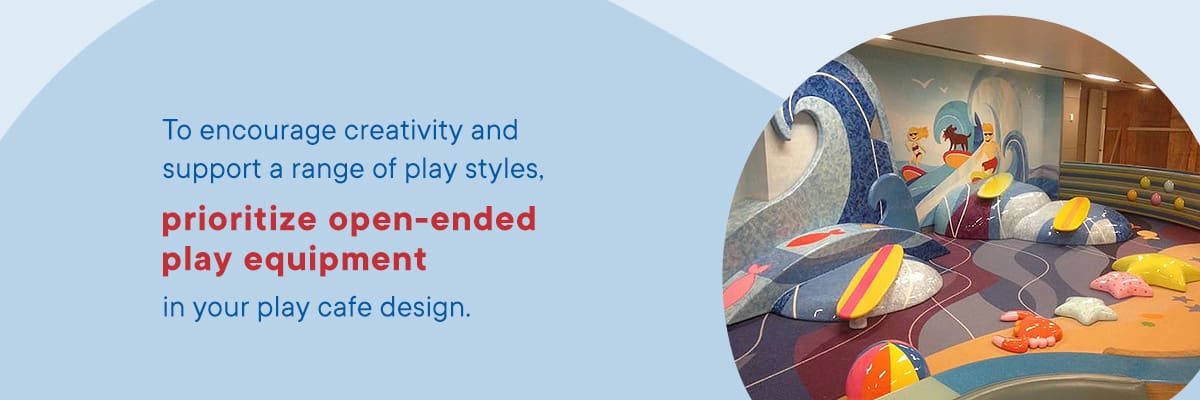
Checklist of Essential Play Elements
A well-rounded play cafe should include a variety of features to appeal to kids and provide comfort for parents. Elements include:
- Safety surfacing
- Climbers, slides and tunnels
- Interactive obstacle courses
- Play sculptures in your chosen theme
- Hanging sculptures
- Contained play areas
- Play panels
- Pretend-play props
- Themed signage and enticing entrances
Remember to include comfortable seating for parents so they can relax and supervise their kids with ease. This mix of play and comfort helps create a welcoming environment for the whole family.
Common Mistakes to Avoid When Designing a Play Cafe
Here are some of the most common pitfalls to watch out for when designing a play cafe:
- Overcrowding play areas: Too much equipment in a small space can impede movement and supervision and cause bottlenecks.
- Neglecting parent comfort: Without lots of comfortable seating and amenities, parents or caregivers won’t want to stay for long.
- Ignoring local safety codes or accessibility requirements: Noncompliance with regulations can lead to fines and reputation loss.
- Failing to plan flexible, multi-use spaces: A rigid, one-dimensional play cafe design prevents the space from being adapted for parties or special events.
- Underestimating the importance of professional design input: Going it alone when planning your play cafe can result in costly redesigns or safety issues.
- Using equipment that’s hard to clean or maintain: Materials and finishes that are hard to wipe down and disinfect may become unsafe and unappealing over time.
Maintenance and Upkeep: Protecting Your Investment
Ongoing maintenance is crucial for keeping your play cafe safe, clean and appealing. Proactive maintenance will protect your investment and ensure a positive experience for every visitor.
Routine Cleaning and Inspection Schedules
Set up daily, weekly and monthly cleaning routines for all equipment and surfaces to maintain a safe and hygienic environment. In addition to cleaning, schedule regular safety inspections to quickly identify and address wear or damage so your play cafe remains safe and inviting.
Training Staff on Equipment Use and Safety
Make sure your staff have thorough training on supervising play areas, cleaning procedures and handling emergencies. Encourage team members to quickly report any issues and consistently follow established safety protocols. This will help prevent accidents and maintain high standards.
Planning for Periodic Updates or Refreshes
Set aside part of your budget for occasional upgrades to play equipment, decor and amenities. Consider rotating themes or introducing new features from time to time to keep your space fresh and exciting. This will encourage families to come back and experience something new.
Marketing Your Play Cafe: Attracting Families and Building Loyalty
A well-designed play cafe is only successful if families know about it and keep coming back. Strategic marketing can help you build a loyal customer base and maximize your investment. Here are four key ways to do it:
1. Host Grand Opening Events and Themed Parties
Kick off your play cafe’s launch with special events, giveaways and exclusive previews to generate excitement and draw in your first customers. Offering themed birthday parties or seasonal celebrations is a great way to attract new families and encourage repeat visits. These events create memorable experiences and help establish your cafe as a go-to destination for family fun in the community.
2. Use Social Media and Local Partnerships
Promote your play cafe by sharing photos, videos and customer testimonials on platforms like Instagram and Facebook. Social media is a powerful tool for building awareness and showcasing your unique offerings. Additionally, partnering with local schools, businesses or parenting groups for cross-promotion can help you reach a wider audience and strengthen your ties in the community.
3. Create Membership Programs or Loyalty Incentives
Encourage repeat business by offering membership programs or loyalty incentives like discounted rates, priority booking or exclusive perks for frequent visitors. Digital punch cards or loyalty apps make it easy to track visits and reward your most loyal customers. This creates a sense of belonging and appreciation.
4. Showcase Unique Features in Marketing Materials
When setting up a play cafe, make sure to highlight your cafe’s standout features — like sensory-friendly hours, themed play areas or inclusive design — in all your marketing material. Use professional photos and clear, compelling messaging to communicate the value your play cafe offers. This will help you stand out from the competition and attract families looking for a special experience.
Real-World Inspiration: Play Cafe Design Gallery
Looking for inspiration? Here are a few standout play cafe designs that showcase creativity, inclusivity and business success.
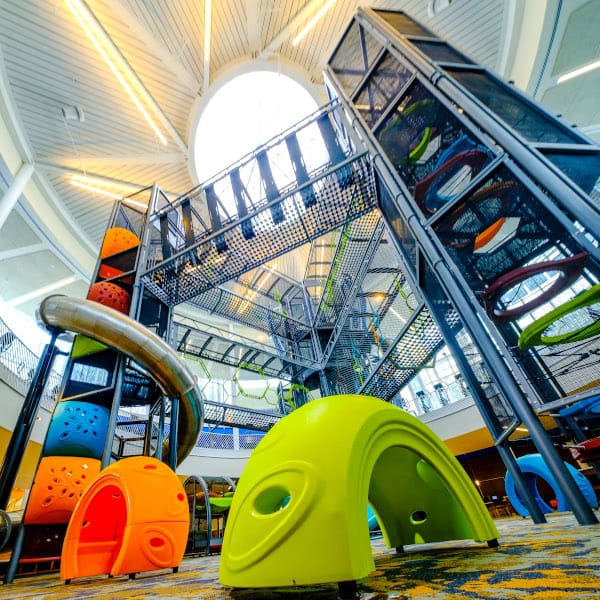
The Stephen G. Terrell Recreation Center turned its lobby into an immersive, multilevel play environment with 40-foot towers connected by enclosed catwalks and bridges. A play deck extends the space with age-appropriate play features at ground level, thoughtfully placed within clear sightlines of seating areas for easy supervision.
The jungle-themed kids’ play area at Wichita Eisenhower Airport Terminal has five sculpted foam animals for climbing and exploration, an engaging touch screen, soft flooring and a convenient parent seating area with temporary shoe storage, creating a fun and engaging space for young travelers and their families.
The Woodland Hills Mall play area offers a 2,500-square-foot, nature-themed space filled with interactive elements that encourage kids to explore, develop cognitive and motor skills, and engage with others. Features like floor elements that light up on contact, an interactive LED lighting system, illuminating stepping stones, spinning tops, rocking birds, and digital games create a stimulating and engaging environment. Parents can relax on comfortable seating with clear views of the play area.
Partner With an Expert to Build Your Play Cafe
Designing a play cafe is a complex process that requires expertise in child development, safety standards and business strategy. Partnering with a trusted expert can make all the difference.
Soft Play® offers tailored design consultations, a wide range of customizable equipment and a proven track record of helping businesses succeed. Contact us today to start building a play cafe that delights families and grows your business.