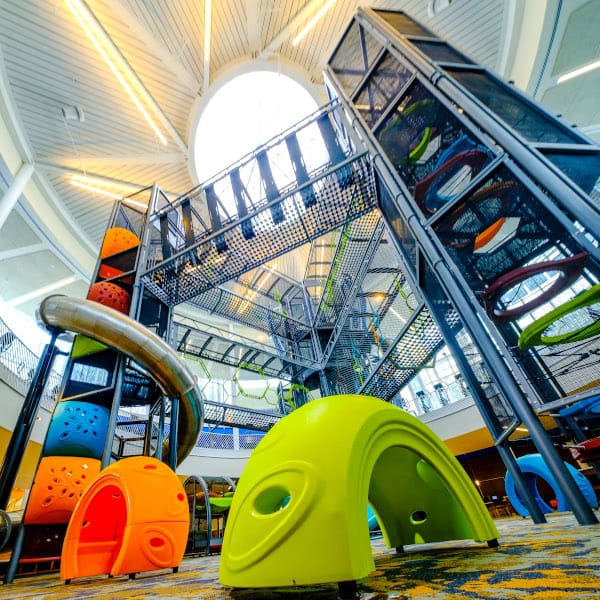
Common Indoor Playground Design Mistakes and How to Avoid Them
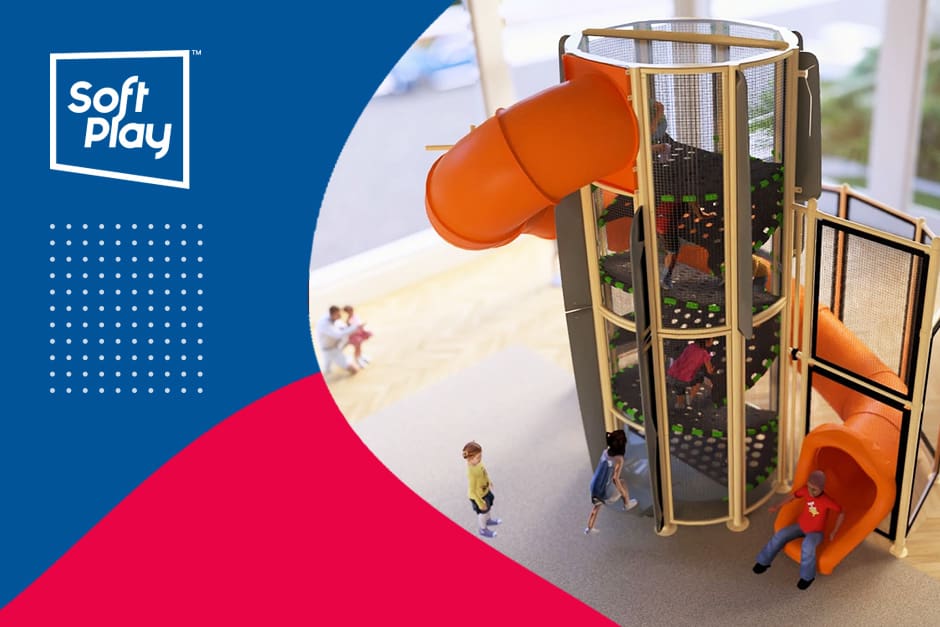
Common Indoor Playground Design Mistakes and How to Avoid Them
Compelling ideas aren’t enough to make an indoor playground profitable. While bright colors and giant slides are eye-catching, design decisions drive revenue. An inefficient layout, low-quality materials and obstructed sightlines are silent profit killers that create safety concerns and missed opportunities.
While passion starts the project, practical choices determine its success. Every element must serve safety, traffic flow and revenue. Importantly, you must also avoid choosing the wrong playground equipment.
The Impact of Indoor Playground Design Mistakes
Well-designed playgrounds attract families with children to stay longer at places like museums, restaurants and family entertainment centers. However, poorly planned choices affect dwell time, repeat visits and daily capacity, leading to these costly problems:
- Long lines at one attraction and underused zones elsewhere
- Staff who must constantly redirect traffic
- Parents hovering because they cannot see their kids clearly
- Equipment closures for repairs during peak hours
Each issue affects your bottom line. Encouraging visitors to spend even a few more minutes can boost your per-capita spending, and your layout directly impacts that metric. If kids soon lose interest in activities, families leave sooner.
Maintenance also compounds. Facilities using noncommercial materials can see significantly higher annual repair frequency, and these closures reduce capacity and create negative guest perception.
5 Top Indoor Playground Planning Errors
Most underperforming facilities share one or more of these planning oversights.
Mistake 1 — The Dead-End Layout
Dead ends interrupt the natural flow of play. Imagine a two‑story climber whose slide ends in a corner with only one narrow staircase leading back up. The lower level will quickly become congested by kids gathering in a slow‑moving line to re‑enter the structure, and staff will need to intervene to manage traffic, redirect children and keep the area safe.
This layout limits circulation and reduces the frequency with which kids can play. In contrast, a continuous loop that connects a climber to a crawl tunnel and a second slide that re-enters near other access points keeps movement flowing, so kids stay engaged without backtracking.
Continuous pathways improve:
- Play velocity
- Space use
- Supervision efficiency
Loops extend activity without expanding size, whereas dead ends consume square footage without generating repeat interaction.
Mistake 2 — Ignoring the Parent Experience
Parents control visit frequency. Repeat business will decline if the parent experience feels like an afterthought, because adults want destinations the whole family can enjoy.
Oversights include:
- Seating directly under high-noise zones
- Columns blocking sightlines
- Limited table surfaces for food and devices
- No visual separation between toddler and older zones
Parents want to monitor their kids without obstructed visibility. If they must stand to do so, they are more likely to cut their stay short. Research confirms that simple amenities, such as accessible restrooms and comfortable infrastructure, can increase dwell time by 48%.
To address this, the design should offer:
- Elevated seating platforms for panoramic views
- Defined cafe zones outside high-traffic paths
- Direct sight lines into toddler areas
- Acoustic treatments that reduce echo
Mistake 3 — Playground Equipment Mishaps
Expecting all age groups to share the same equipment reduces safety and satisfaction. A 3-year-old traversing a 48-inch deck height sees risk differently than an 8-year-old looking for speed and challenge.
Without separate zones for different age groups, older kids tend to dominate challenging features while younger ones hang back and stop playing. Purpose-built systems offer scaled components for early childhood development.
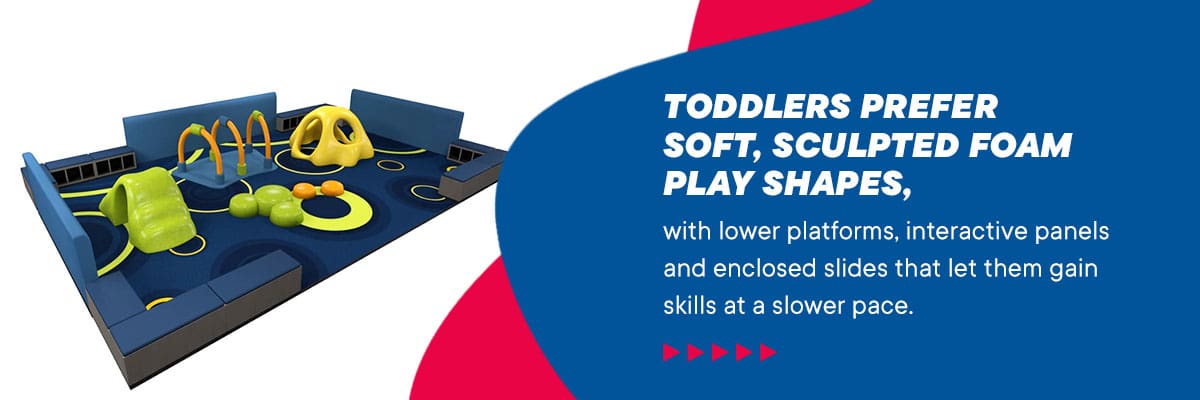
Toddlers prefer soft, sculpted foam play shapes, with lower platforms, interactive panels and enclosed slides that let them gain skills at a slower pace. Older kids enjoy adventure playground systems and structured challenge courses that support climbing, balance and timed movement.
Clear separation brings the following benefits:
- Reducing incident reports
- Improving parent trust
- Increasing usable capacity across ages
Mistake 4 — Skimping on Durable Materials
Durability is a strategic investment, not an aesthetic upgrade. Some operators choose thin rotationally molded plastics or low-density foam to reduce capital expenses. These surfaces quickly fade, crack or compress, causing safety risks and damaging your brand.
The American Society for Testing and Materials uses ASTM F1918 to set performance standards for soft contained play. Commercial-grade systems built to this standard address entrapment, impact attenuation and structural stability.
Higher-quality materials typically include:
- Reinforced vinyl with UV inhibitors
- Multilayered foam engineered for rebound
- Powder-coated steel framing
- Encapsulated fasteners to prevent tampering
Mistake 5 — Overcrowding the Fun
Adding more features to a fixed footprint does not automatically increase capacity. When circulation paths narrow below the recommended width, staff must manually regulate traffic, which can also constrain emergency egress routes.
Your facility’s real capacity depends on:
- Safe egress width
- Clear vertical sightlines
- Even attraction distribution
Multilevel contained play systems support vertical design, increasing activity density while preserving floor circulation. By building upward, you maintain open pathways at ground level.
How to Avoid Indoor Playground Design Mistakes
Prevention starts with data-driven planning. Since indoor playgrounds combine architecture, child development and hospitality, professional designers must create safe, engaging and efficient spaces. Maximize your return on investment with these three strategic actions.
- Start with a professional design consultation: Engage experts who model traffic flow, supervision zones and occupancy loads before finalizing equipment selection.
- Prioritize vertical space and flow: Design with continuous pathways, defined zones and clear egress routes. Treat ceiling height as a revenue opportunity.
- Future-proof with commercial-grade equipment: Select ASTM-compliant systems engineered for heavy daily use. Consider modular components that allow phased expansion.
Follow Safety Standards for Indoor Playgrounds
In addition to using products that comply with ASTM F1918 and the Consumer Product Safety Improvement Act of 2008, facilities must also comply with local building codes and fire egress regulations, and meet accessibility requirements set by the Americans with Disabilities Act.
Establish consistent documented inspection schedules and maintenance logs to protect guests and mitigate your liability exposure. It is best practice to partner with a service provider that designs solutions for various themes, architectural accents and play systems.
Partner With Soft Play® for Indoor Playground Design

Indoor playground performance depends on deliberate planning. With the right products, your indoor playground has a lifespan between eight and 15 years, supporting your investment in the long term.
Soft Play integrates traffic modeling, age zoning, ASTM-compliant systems and parent-focused layouts into a cohesive strategy. Our team evaluates circulation flow and capacity targets to design a durable, easily supervised space designed for guest engagement. With over 40 years of experience, Soft Play has a wealth of knowledge on developing the most innovative playground designs for your space. Partner with us to transform square footage into a high-performing, revenue-generating environment.
Contact us online to start your project with a free design consultation or call us at 704-610-2298.