Indoor Playground Design Trends
Indoor Playground Design Trends
Families walking into a trampoline park, museum or other entertainment center often bring expectations shaped by their last great experience somewhere else, whether that was a themed party, an interactive arcade or something they saw shared online. Meeting those expectations starts with paying attention to indoor playground trends that shape how a space feels the moment customers walk in.
On average, families spend 2.1 hours per visit at an indoor playground, and their experience shapes whether they return. Thoughtful design choices can turn a single visit into regular trips.
By staying current with design trends for indoor playgrounds, businesses can match every design choice to what families actually want. Here’s what’s shaping the industry right now.
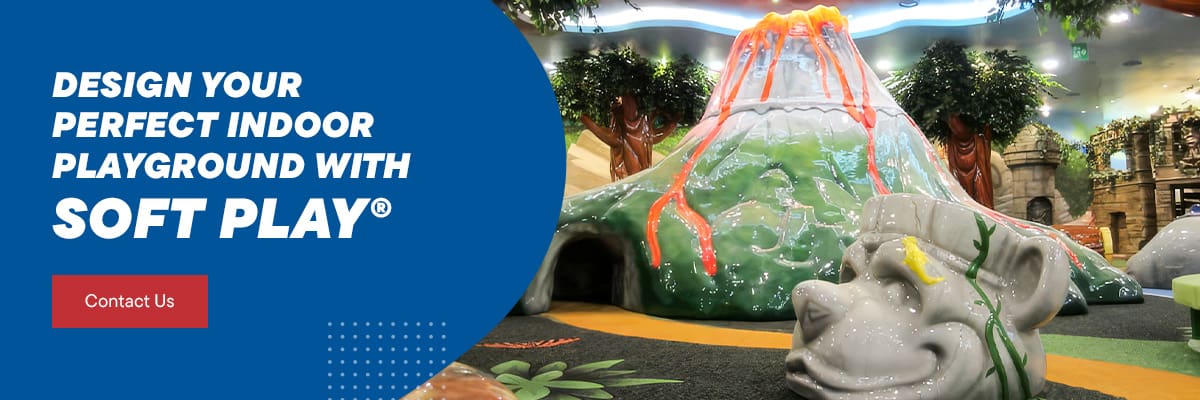
1. Immersive, Themed Environments
Screens and passive entertainment make it easy for kids to consume other people’s creativity rather than build their own. In contrast, imaginative play supports healthy child development in meaningful ways. Themed indoor playgrounds, in particular, give kids a fully realized world to explore, sparking the kind of imaginative engagement screens rarely offer.
For business owners, themed playgrounds hold real potential. For instance, a playground can echo an existing brand, such as a science museum installing a space station design or a church choosing a Noah’s Ark motif. Alternatively, it can stand on its own with a theme kids love, from dinosaurs to candy to animals.
Details can stay subtle, like brand colors woven into the equipment, or go all in with fully custom pieces built around the concept. Museums, churches, shopping centers, restaurants and daycares can all use themed equipment to create a unique look and feel.
Themed playgrounds deliver additional business value:
- Photo opportunities: A visually striking themed playground provides families with a natural backdrop for photos they share online, helping spread the word about the venue for free.
- Brand reinforcement: Colors, mascots and concepts woven into a playground strengthen recognition with every visit.
- Cohesive design: Custom theming lets a playground blend into a venue’s existing look.
- Event appeal: A themed playground gives birthday parties and gatherings a built-in draw, keeping kids entertained while parents relax.
2. Interactive and Tech-Integrated Play
Technology has become a core part of how kids play indoors. Cutting-edge features such as projection games, motion-based floors and responsive lighting turn a static room into one that reacts to the people inside it.
These elements often hold attention longer than static equipment, and families increasingly expect that level of dynamic engagement when they choose where to spend their afternoon. That extra engagement matters for business, since every additional minute a family stays often translates into more spending across food, retail and add-on activities. Industry statistics show that gamification apps can increase dwell time by 25%.
Interactive elements also support repeat visits, since the experience can evolve through content updates rather than requiring a full equipment overhaul. A play zone that changes each month keeps regulars curious about what’s new.
3. Inclusive and Accessible Design
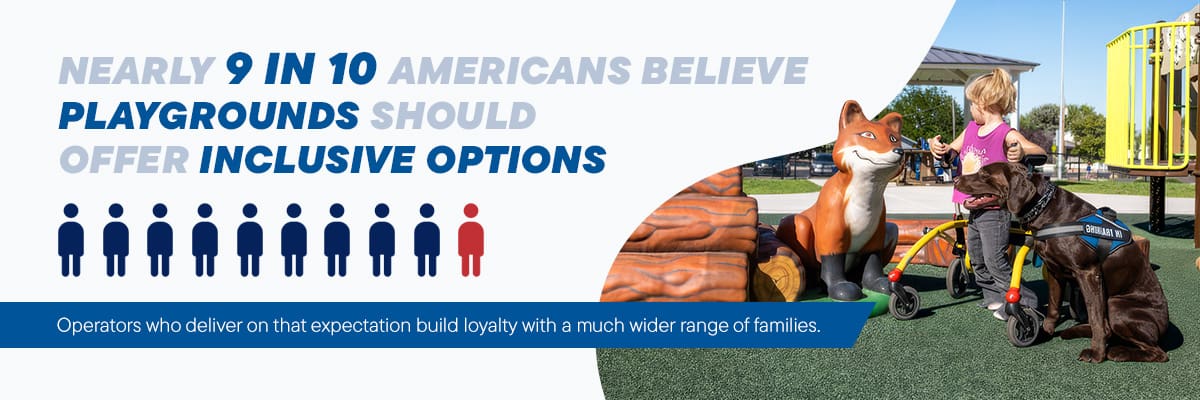
Inclusive design covers a range of features that work together:
- Wheelchair-accessible elements: Ramps, wide pathways and ground-level activities allow wheelchair users to move through the space freely.
- Sensory-rich zones: Specific textures, sounds and visuals can better engage a range of sensory preferences and needs.
- Quiet areas: Calmer spaces placed alongside active play give kids a place to regroup when they need one.
- Equipment designed for different abilities: Accessible structures accommodate kids with a wide range of physical and developmental abilities in the same space.
- ADA-compliant routes and transfer stations: These features often meet or exceed ADA accessibility standards and help kids move between equipment independently.
- Neurodivergent-friendly design: Thoughtful lighting, sound and layout choices support kids who process sensory input differently.
4. Cross-Generational Play
Nearly 94% of people believe play belongs to all ages, and adults aged 18 to 44 now account for close to one-third of global toy purchases. These statistics show that adults also want in on the fun. Today’s most effective indoor play spaces give parents, grandparents, teens and toddlers all something to do. Cross-generational playground design extends dwell time and widens a venue’s audience.
When families share the experience, it creates shared memories that can drive repeat trips at a higher rate than experiences designed for kids alone. Entertainment options for various age groups also encourage families to spend more time together.
5. Adventure and High-Action Zones
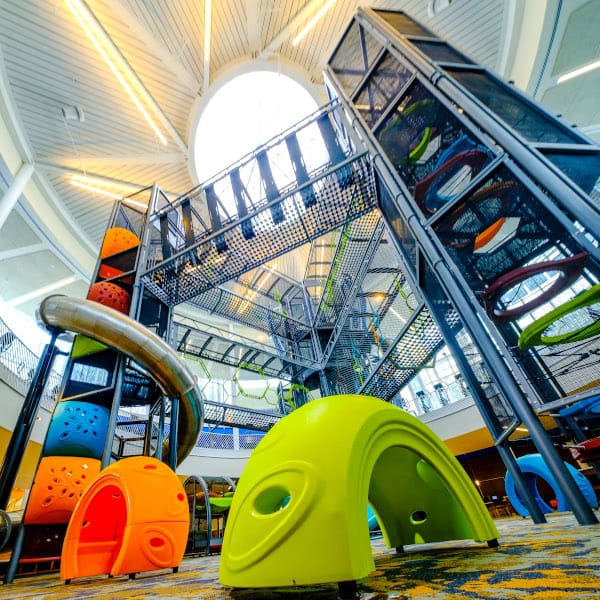
Older kids and teens want a genuine physical challenge, and standard playground equipment often loses its appeal once kids age out of it. Adventure zones fill that gap and extend the age range a venue can attract. Common features in high-action zones include:
- Non-belayed high ropes courses: Kids can navigate elevated paths and obstacles at their own pace, testing their balance and confidence.
- Climbing towers and multilevel structures: Multilevel structures give kids a sense of achievement with every level they reach. Layered designs create a sense of risk and reward that keeps teens coming back to try again.
- Obstacle-style challenges: Timed or sequential courses turn physical activity into a game that older kids want to beat.
Adventure and high-action design styles appeal to older kids, teens and even adults looking for something more physical than typical play equipment offers. That wider appeal means a venue can hold on to families longer as kids grow, rather than losing them to competitors once toddler-focused equipment loses its shine.
6. Sustainable Design
Sustainability continues to shape indoor playground design, influencing both appearance and longevity. For instance, biophilic elements such as natural textures, organic shapes and earthy color palettes bring the outdoors inside and appeal to families who value that connection to nature.
Durability plays an equally important role. Durable equipment reduces material waste and lowers the total cost of ownership over time. Operators who choose based on price alone may find that equipment needs replacement within three to four years, while those who prioritize quality experience far fewer replacement cycles. The cheapest option rarely holds up over time, and operators who’ve learned that lesson often return to quality-built systems instead. With proper maintenance, quality playground equipment can serve a venue for well over a decade.
Design Your Perfect Indoor Playground With Soft Play®
Today’s most successful play spaces blend immersive theming, interactive technology, inclusive access and durable construction to broaden the customer base and keep families coming back.
Whether you’re looking to boost your business with a custom-themed playground or bolster your offerings with an adventure playground, Soft Play can bring your ideas to life, from design to installation. We offer free design consultations and can generate a playground design and quote in as little as two weeks. Backed by more than 40 years of experience, all our designs meet U.S. ASTM standards.
To get started, browse our design gallery for inspiration or contact us today.